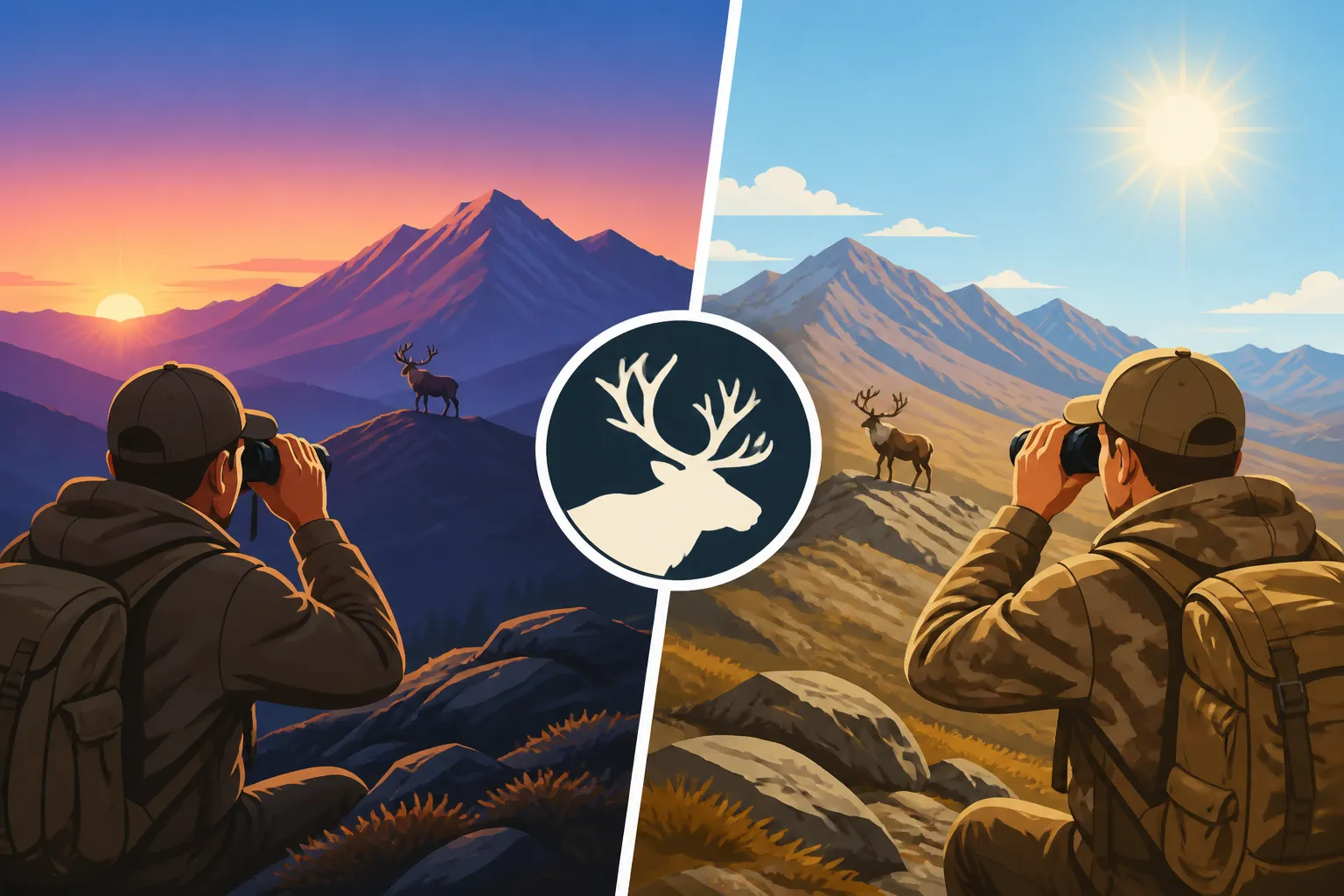
Glassing at First Light Versus Midday
It's a familiar scenario: you've hiked for hours, set up your spotting scope on a prime knob, and the sun is just starting to kiss the peaks. Every hunter worth their salt knows that first light is prime time, but what about those long hours between breakfast and evening feeding? Many hunters pack up their optics during the middle of the day, convinced the animals are bedded down and invisible, missing out on crucial opportunities. This guide will dive deep into the nuances of glassing in Alaska, dissecting the benefits of both first-light and midday strategies to help you maximize your time in the field and fill your tag.
The Irresistible Pull of First Light Glassing
There's a reason every hunting show starts with the sun rising over a majestic landscape as the hunter scans the horizon. First light, and equally important, the last hour of daylight, often present the most active periods for many big game animals in Alaska. This isn't just tradition; it's rooted in animal behavior and environmental conditions.
At the break of dawn, the air is typically cooler and calmer, which means animals like moose, caribou, and sheep are often still on the move, grazing after a long night, or relocating to their bedding areas. The low angle of the sun creates long shadows and sharp contrasts, which can actually help illuminate the outline of an animal against a background that might blend in perfectly during harsh midday sun. Imagine a dark shape moving against a snowfield or the subtle twitch of an ear poking above a willow patch – these are often more visible in the softer, directional light of morning. You can often catch those tell-tale movements before the animals settle in. For a hunter trying to judge a legal bull under Alaska antler rules, these moments can be precious, offering a clear profile before they vanish into thicker cover.
Being in position well before the sun comes up is absolutely critical. This means hiking to your chosen glassing knob in the dark, often with a headlamp, setting up your tripod, and getting your optics steady as the first hint of twilight paints the sky. The payoff can be huge, as you catch animals in transition, perhaps moving from an open feeding area into denser timber or seeking the cooler shade of a north-facing slope. This is also when you might observe patterns of movement that inform your stalk for the rest of the day.
Unlocking the Hidden Opportunities of Midday Glassing
While first light and last light are undeniably productive, dismissing the middle of the day as "dead time" is a mistake many hunters make, especially in challenging terrain like Alaska. Midday glassing might require a different approach and a whole lot more patience, but it can be incredibly effective, particularly for high-country animals such as Dall sheep and mountain goats, or even for locating bears as they might move to new feeding areas or simply adjust their bedding positions.
During the harsh sun of midday, animals often seek cover in shaded areas, bed down in terrain features that offer security, or move deliberately between patches of forage. The key here isn't to look for active animals but to pick apart the landscape for anomalies. This is where you put your patience to the test. Instead of sweeping quickly, you slow down, methodically working through your glassing grids that cover a whole basin. You're looking for an ear, a horn tip, a patch of fur that just doesn't quite match the surrounding rock or tundra. Sometimes, a subtle shift in color or an unnatural straight line can betray a bedded animal that has been invisible for hours.
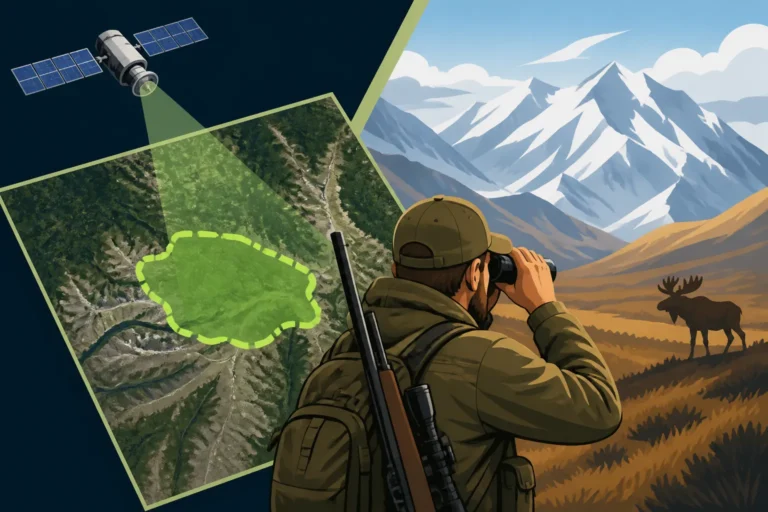
Heat shimmer, or mirage, can be a real challenge during midday, especially over sun-baked slopes or across vast stretches of tundra. This distortion can make judging distances and identifying details incredibly difficult. However, by understanding these conditions, you can adapt. Often, glassing from a higher vantage point looking down, or focusing on areas that are still in shadow or less prone to ground heat, can mitigate some of these effects. Furthermore, animals sometimes stand up and stretch, or shift their weight, even while bedded, offering a brief window to spot them. These short, unhurried movements are often enough for a seasoned glasser to pick them out. Tools like GoHunt's mapping features can be invaluable for identifying potential midday bedding areas on satellite imagery before you even leave town.
Navigating Environmental Challenges and Animal Behavior
Both first light and midday glassing come with their own set of environmental hurdles and require a keen understanding of animal behavior in different conditions.
The Trials of Early Morning and Late Evening
The low light of dawn and dusk, while advantageous for visibility, also presents challenges. Condensation can fog up your optics if not properly cared for. The cold can drain battery life from electronic devices like rangefinders and GPS units, especially important for alpine navigation without cell service. You might also encounter heavy dew or even frost, which affects your comfort and can create an audible crunch underfoot if you're not careful on your approach to a glassing point. Moreover, the wind often picks up or dies down dramatically during these transition periods, making it harder to hear distant animal sounds or predict thermals for a scent-free approach.
Animal behavior at these times is largely driven by feeding and movement. Moose will often be found in willow flats versus spruce for bull moose, actively browsing. Dall sheep might be moving off bedding cliffs to graze on alpine meadows. Caribou could be covering significant ground on their migrations. Your strategy should be to get to your position silently and early, allowing the animals to settle into their morning routines while you observe them from a distance. The patience here is in the waiting game for light to fully break and for animals to reveal themselves.
The Peculiarities of Midday Conditions
Midday in Alaska can throw a different wrench into your plans. The sun can be incredibly intense, especially when reflected off snowfields or light-colored rock, leading to eye fatigue. As mentioned, heat shimmer distorts images, and animals are generally less active, conserving energy or seeking shade. This means you’re looking for static, camouflaged forms rather than moving targets.
For example, a big brown bear might be completely camouflaged against a brushy hillside, only betrayed by the distinct curve of its back or the unique color of its fur against the greens and browns. A mountain goat might be a white speck high on a craggy peak, seemingly just another rock until your eye catches the unnatural shape. Understanding where these animals would bed down—a shady bench, a slight depression, a cluster of subalpine fir—is critical. This is where extensive scouting a unit from satellite imagery before you fly really pays off, allowing you to mark potential bedding spots. Knowing the terrain and using a powerful spotting scope power for ram judging, combined with a stable tripod height for all-day glassing, becomes your biggest asset.
Optimizing Your Glassing Strategy for All Hours
To truly maximize your chances in the Alaskan wilderness, you need a dynamic glassing strategy that fluidly adapts to the time of day and the changing conditions. It’s not about choosing between first light and midday; it’s about mastering both.
Strategic Positioning and Gear Selection
Your choice of glassing location is paramount. For first light, you want a vantage point that overlooks prime feeding areas and potential travel corridors. This often means being high enough to see far, but not so high that you're battling extreme winds or cold. For midday, the best spots might be slightly different. Consider positions that allow you to look into shaded bowls or down onto lower slopes where animals might be bedded, minimizing the effects of direct sun and heat shimmer.
Proper gear makes all the difference. High-quality binoculars are essential for wide-area scanning at any time. A top-tier spotting scope is non-negotiable for picking apart distant cover and making those crucial determinations, like counting brow tines on a live bull or judging a full-curl ram from below. Always ensure your tripod is rock-solid. A flimsy tripod is a frustration you don't need when you're trying to hold a spotting scope steady for long periods. You can learn more about choosing the right setup in "Tripod Height for All-Day Glassing."
Adapting Your Pace and Focus
At first light, be ready for action. Your scans should be thorough but efficient, covering large swaths of terrain to catch animals on the move. Once you spot something, be prepared to quickly switch to your spotting scope for detailed observation.
Midday requires a completely different rhythm. This is a game of patience and meticulous detail. Your scans will be much slower, more deliberate, and often focused on smaller, more likely bedding areas. Break down the landscape into small, manageable sections, using "Glassing Grids That Cover a Whole Basin" as your guide, and analyze each one as if you're searching for a lost contact lens. This is also a fantastic time to analyze maps and plan your next move, perhaps confirming travel routes or marking potential escape cover on your GPS, like with GoHunt's robust mapping features. If you've just come off a long hike to a spike camp above a sheep basin, these midday hours are also a good time to rest your legs and refuel while still being productive.
Here’s a quick overview of how the two glassing periods compare:
| Feature | First Light Glassing | Midday Glassing |
|---|---|---|
| Animal Activity | High (feeding, moving to bedding) | Low (bedded, seeking shade) |
| Visibility | Good contrast, long shadows, soft light | Harsh direct sun, heat shimmer, bright reflections |
| Primary Goal | Spot moving animals, identify patterns, initial location | Pick apart static cover, find bedded animals, confirm location |
| Patience Level | Moderate (waiting for light, identifying initial movement) | High (meticulous scanning, prolonged observation) |
| Common Species | Moose, Caribou, Black Bear | Dall Sheep, Mountain Goat, Brown Bear (bedded) |
| Optimal Gear | Binoculars for scanning, spotting scope for detail | Spotting scope for detail, stable tripod, shade |
| Challenges | Cold, condensation, limited light for fine detail | Heat shimmer, eye fatigue, animals well-camouflaged |
Remember, flexibility is your greatest tool in Alaska. There will be days when dense fog rolls in at first light, making long-range glassing impossible. On those days, focusing on closer, timbered areas or planning your approach for later in the day might be your best bet. Conversely, a clear, calm midday after a stormy morning can reveal animals that were previously hidden. Always be ready to adapt and make the most of the conditions presented to you. For a successful hunt, a comprehensive approach to glassing throughout the day is non-negotiable.
Disclaimer
Hunting in Alaska carries inherent risks, including but not limited to severe weather, dangerous wildlife, and remote wilderness hazards. The information provided in this guide is for informational purposes only and should not replace professional advice, extensive research, proper training, or adherence to all Alaska Department of Fish and Game regulations. Always prioritize safety and prepare thoroughly for any Alaskan hunting expedition.