Field Judging a Legal Bull Under Alaska Antler Rules
There's a specific kind of knot that forms in a hunter's stomach when they finally spot that bull moose across an Alaskan muskeg, and the first thought isn't about the shot, but: "Is he legal?" Alaska's antler rules can feel like a labyrinth, confusing even seasoned hunters, and the fear of making a mistake – of pulling the trigger on a sublegal bull – is very real, carrying hefty penalties. This guide is here to untangle those rules, giving you the practical strategies and visual cues you need to confidently field judge a legal bull in the vast Alaskan wild.
Understanding Alaska's Antler Restriction Fundamentals
Alaska is a wild place, but even here, we manage our game carefully to ensure healthy populations for future generations. Antler restrictions are a cornerstone of that management, and understanding the 'why' behind them helps us navigate the 'how.'
Why Antler Restrictions Exist
It might seem counterintuitive to put limits on the size of an animal you can harvest, especially in a state as immense as Alaska. But these rules aren't designed to make your hunt harder; they're a vital part of moose management. By protecting younger bulls or those with specific antler characteristics, game managers aim to achieve several things: first, to allow younger bulls to reach maturity and contribute to breeding, ensuring a robust genetic pool. Second, they can help balance the bull-to-cow ratio in a herd, leading to more successful breeding seasons. Third, they distribute hunting pressure, encouraging hunters to pass on smaller, often more accessible bulls, and focus on those meeting specific criteria, which often means putting in more effort for a mature animal. It’s all about sustainable hunting and ensuring future opportunities for all of us.
Key Antler Terminology You Need to Know
Before we dive into the nitty-gritty of judging, let's make sure we're all speaking the same language when it comes to moose antlers. These aren't just big racks; they have distinct parts that are critical to understanding the regulations.
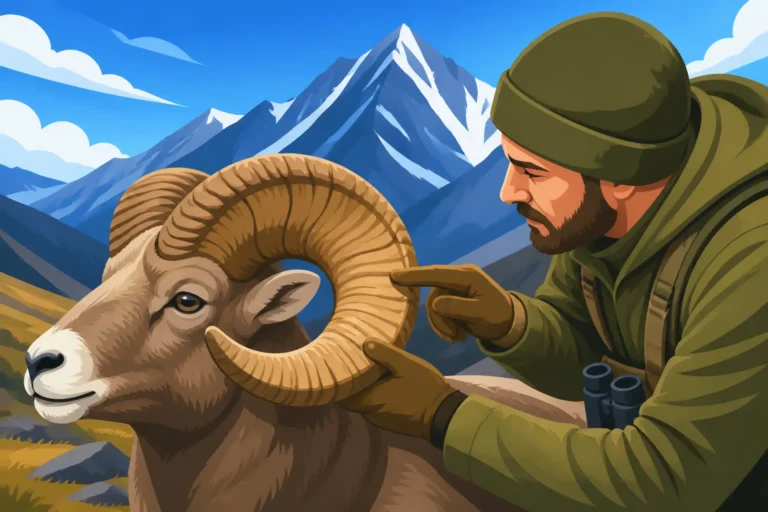
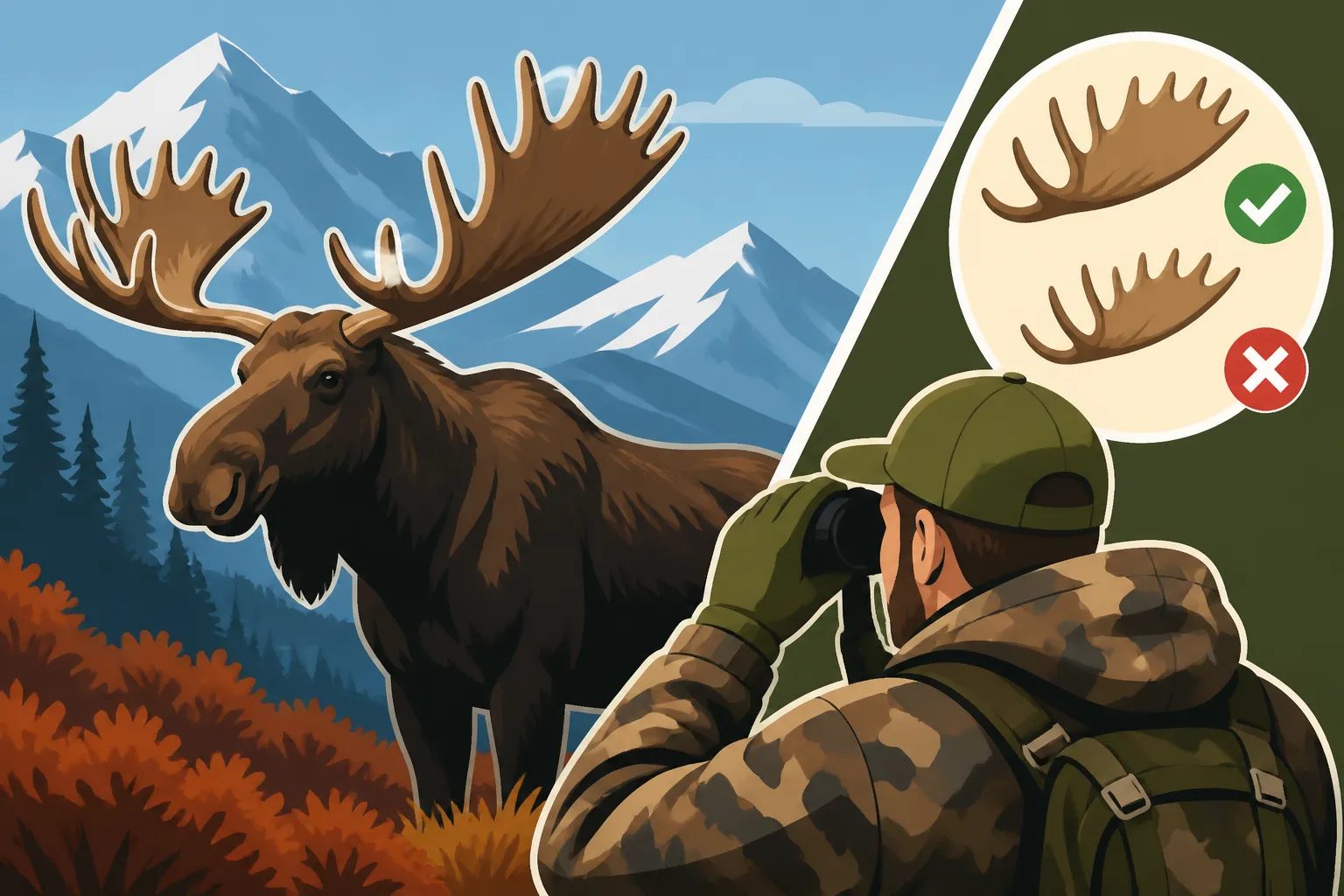
The main beam is the heavy, foundational part of the antler that grows out from the skull. From this main beam, various points and tines project. A point is any projection off the main beam that is at least one inch long. Brow tines are the points that extend forward from the lower, front portion of the main beam, often curving down towards the moose's face. The large, flattened part of the antler is called the palm, and sometimes regulations refer to the overall width, or spread, of the antlers, measured from the widest points on each side. Knowing these terms is the first step to confidently Field Judging a Legal Bull Under Alaska Antler Rules.
The "Either-Sex" Versus "Antler Restricted" Unit Distinction
This is perhaps the most crucial distinction you need to understand when planning your hunt. Not all Game Management Units (GMUs) in Alaska have the same rules, and a bull that's perfectly legal in one area might get you a citation in another.
In an "either-sex" unit, the rules are simpler: if it's a bull, and the season is open, it's legal. These units are typically found in areas with healthy, robust moose populations that can sustain a less restrictive harvest. However, many popular hunting units, especially those with road access or higher hunting pressure, operate under "antler restricted" rules. These are the areas where you'll encounter the 50-inch spread rule, the spike-fork rule, or specific brow tine requirements. Always, and I mean always, check the current Alaska hunting regulations booklet for the specific GMU you plan to hunt. A tool like GoHunt's mapping and regulation data can be invaluable for quickly understanding the rules for your chosen unit, helping you avoid an unfortunate misunderstanding in the field.
The 50-Inch Spread Rule: More Than Just a Number
The 50-inch spread rule is one of the most iconic and often debated antler restrictions in Alaska. It aims to protect younger, genetically viable bulls by only allowing the harvest of truly mature animals, those whose antlers have achieved a certain impressive width.
Visual Cues for Estimating 50 Inches
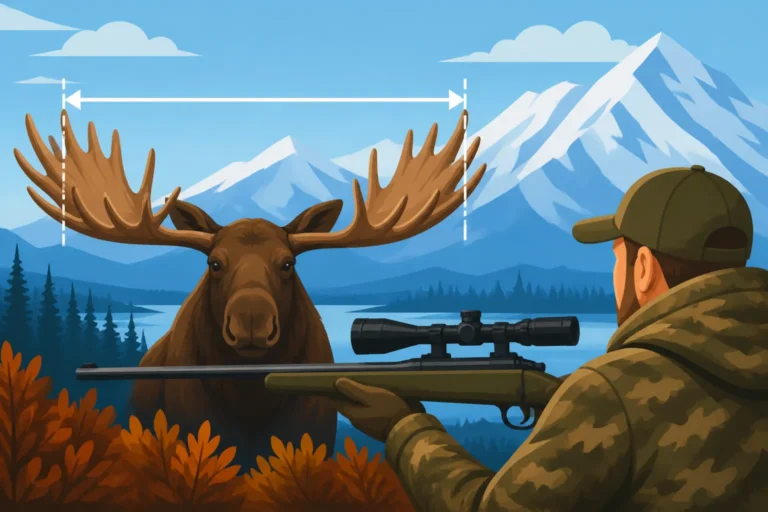
Fifty inches sounds like a lot, and it is. The challenge is trying to gauge that distance across a vast landscape, often through shimmering thermals, at long range. One of the most common and effective visual cues hunters use is their rifle. A standard hunting rifle (like a .30-06 or .300 Win Mag) with a 24-inch barrel, from buttstock to muzzle, is roughly 40-45 inches long. If a bull's antlers clearly extend beyond both sides of your rifle when held horizontally against its body, you're likely looking at a 50-inch bull.
Another common trick is to compare the antler spread to the width of the moose's body or the distance from ear tip to ear tip. A very large bull's body at the shoulders can be around 30-36 inches wide. If the antlers extend significantly beyond the animal's body width on both sides, you might be in the ballpark. The distance between a mature bull's ear tips, when alert, is often cited as a benchmark – usually in the 20-25 inch range. So, if the antler spread looks at least twice the width of its ears, you're getting closer. This kind of mental calibration, often practiced before the hunt, is detailed further in guides like Measuring a 50-Inch Spread Against Your Rifle. Remember, it’s not just about one side, it’s the full spread from tip to tip.
Common Mistakes When Judging Spread
Excitement is a powerful force in the field, and it can play tricks on your eyes. One of the most common mistakes is angle distortion. A bull standing quartering away or directly towards you will make his antlers appear much narrower than they actually are. You need to wait for him to broadside, or at least be at an angle where you can get a clear, perpendicular view of his rack.
Distance distortion is another huge culprit. The further away the animal, the smaller it appears, and this foreshortening can lead you to overestimate a smaller bull or underestimate a truly large one. Your optics, while essential, can also contribute if you're not careful. Rapidly zooming in and out or using too high a magnification can make it difficult to get a consistent feel for scale. Finally, simply rushing the judgment – driven by the adrenaline of seeing a bull – is a mistake many hunters regret. Taking your time, even if it means letting the bull walk a bit further, is paramount.
Practice, Practice, Practice
Like any skill, field judging gets better with practice. This isn't just something you do in the field; it's something you prepare for well in advance. Spend time with quality optics, like a good pair of binoculars or a spotting scope, looking at cattle, domestic animals, or even distant trees, trying to estimate their size and comparing your estimates to known measurements.
Before your hunt, study photographs of legal and sublegal bulls in your target GMU. Many state Fish and Game offices, and even tools like GoHunt, offer resources that include images or detailed descriptions of what qualifies. If you have access to a mounted moose rack, or even just shed antlers, physically measuring them and then stepping back to practice estimating their spread from various distances can be incredibly beneficial. The more you train your eye, the more confident you'll be when that actual bull steps out.
Decoding the Spike-Fork Rule: A Detailed Look
While the 50-inch rule targets mature bulls, the spike-fork rule often targets the youngest bulls, providing protection during their initial growth years. It can be deceptively simple, yet equally challenging to judge correctly in the wild.
What Constitutes a Spike or a Fork
The "spike-fork" rule means that a bull must have at least one antler that is either a "spike" or a "fork." A spike is typically defined as a main beam with no branching points, meaning it's just a single, unbranched antler. Some regulations might specify a minimum length for a spike, but often it's simply the absence of other points. A fork means one antler has at least one branch or point, but not necessarily a complex palm. This is where it gets tricky: it often refers to the first fork off the main beam, or at least one point beyond the main beam's end, creating a "forked" appearance.
The key here is that at least one antler must meet this criterion. So, a bull with one spike and one forked antler, or two forked antlers, or even two spike antlers, could be legal depending on the specific wording of the regulation in your unit. You need to be very precise about what your regulations define. You can find more detailed definitions and visual examples in resources like Spike-Fork Legal Definition in Alaska and Telling a Spike-Fork Bull From a Yearling. Always confirm if your unit's regulation states "a spike or fork on one side" or on both sides, as this can vary.
Challenges of Judging Small Bulls
Younger bulls, the ones most likely to be spike-forks, often present unique challenges. They tend to be smaller, faster, and more easily obscured by vegetation. If you're hunting in thick timber or dense willow flats – common moose habitat – getting a clear, unobstructed view of both antlers can be nearly impossible. Low light conditions, common at dawn and dusk when moose are most active, further complicate judgment, blurring the edges of smaller points.
It's common for these young bulls to be just slightly out of regulation, perhaps a small, unconfirmed point that makes them illegal. The temptation to "make it legal" in your mind, especially after a long, hard hunt, is strong. This is where patience and self-discipline become critical. If you can't be 100% certain, you need to err on the side of caution.
The "No Antler" Loophole
A less common, but important, scenario is when a bull has already shed one or both antlers early in the season, or if an antler has broken off. Regulations generally refer to the antler characteristics at the time of harvest. If a bull has completely shed one antler, and the remaining antler meets the spike-fork criteria, it could potentially be a legal animal, even if its other antler would have made it illegal had it still been attached.
However, this is a nuanced situation, and it underscores the importance of knowing your specific unit's regulations inside and out. Some areas may have additional clauses for "no antler" situations. It’s always best to consult the regulation booklet or even contact an Alaska Department of Fish and Game (ADF&G) biologist if you encounter such a scenario and are unsure. There's nothing worse than assuming legality and being wrong.
The Brow Tine Rule: Counting What Matters
Some specific antler restrictions focus on the presence and number of brow tines, usually in combination with other rules. This often applies to units that are trying to protect bulls of a certain age class by ensuring they have fully developed their antler structure.
What Defines a Legal Brow Tine
A brow tine, as discussed, is a point projecting forward from the lower portion of the main beam. For regulatory purposes, there's often a minimum length requirement, typically 3 or 4 inches, for a projection to count as a "tine." A small bump or an underdeveloped point might not count. Regulations might state something like "at least three brow tines on one side," or "four brow tines or more on one side" in combination with other criteria.
The purpose of these rules is similar to the 50-inch spread: to ensure that only older, more mature bulls are harvested. Bulls typically develop their brow tines more prominently as they age. Therefore, requiring a certain number or length of brow tines helps to ensure that younger bulls are not taken, allowing them to grow into their full potential. For specific information on what counts in different regions, you'll want to review Brow Tine Counts on Alaska Antler-Restricted Bulls.
Field Challenges for Brow Tine Counting
Counting brow tines in the field can be incredibly difficult. Moose antlers, particularly those of mature bulls, can be very dense and complex. From a distance, or when a bull is moving through brush, those forward-facing points can be easily obscured. The natural curve of the main beam can also hide smaller points from view, making it hard to get an accurate count.
Furthermore, the lighting conditions, shadows, and the color of the antlers themselves (velvet vs. hard horn) can all make it challenging to definitively identify and count each individual tine. This is where high-quality optics and extreme patience are your best friends. You need to be able to resolve those details clearly to make an accurate, legal judgment.
Combining Rules: When Spread and Brow Tines Both Apply
It’s not uncommon for a GMU to have multiple antler restrictions that can apply. For example, a regulation might state that a legal bull must have "at least 50 inches of spread OR at least four brow tines on one side." In such a scenario, a bull would be legal if it met either the spread requirement or the brow tine requirement.
Understanding these "OR" versus "AND" conditions is critical. An "OR" condition provides more flexibility, meaning the bull only has to meet one of the stated criteria. An "AND" condition means it must meet all listed criteria. Always read the regulation carefully, paying close attention to these connecting words, as they can completely change the legality of a bull. These complex combinations are why it's vital to study your specific unit's rules carefully, perhaps even highlighting them in your regulation booklet, to ensure you don't misinterpret what constitutes a legal animal.
Practical Strategies for Field Judging Under Pressure
The moment of truth arrives quickly in the field. All the studying in the world won't help if you can't apply it under the intense pressure of a live bull appearing. Having a systematic approach is key.
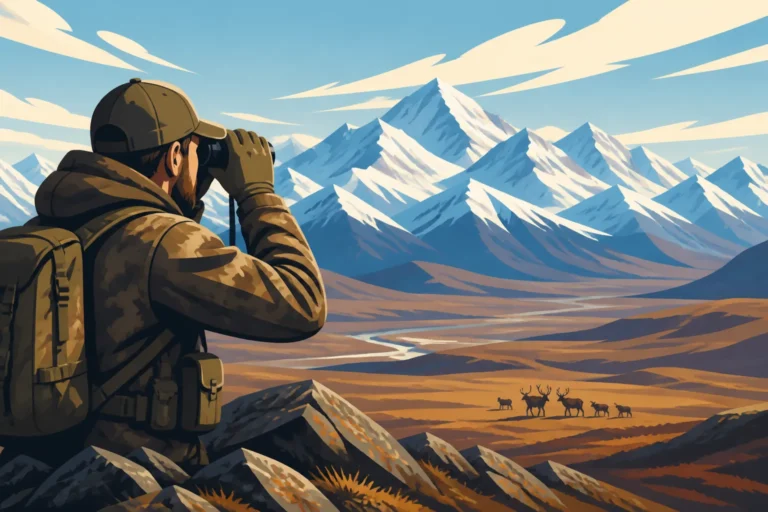
Using Your Optics Effectively
Your binoculars and spotting scope are your best tools for field judging. Don't just give the bull a quick glance and then grab your rifle. Take your time, set up your tripod if you have one, and thoroughly evaluate the animal.
Start with a lower magnification to get a general overview and assess the bull's body size, movement patterns, and whether it's alone or with cows (which can impact its behavior). Then, slowly increase magnification, focusing specifically on the antlers. Sweep across the entire rack, examining each main beam for points, forks, and those critical brow tines. Pay close attention to the widest points for spread estimation. If you're using a spotting scope, train yourself to hold it steady and resolve fine details. Remember, you might only get a few minutes, or even seconds, for a good look, so make those moments count. Utilizing optics effectively often means knowing when to glass at first light versus midday, as different lighting can reveal different details, a topic well covered in Glassing at First Light Versus Midday.
Taking Your Time and Confirming
Adrenaline can make minutes feel like seconds. Resist the urge to rush. Once you spot a bull you think might be legal, settle in. Watch him move. Wait for him to turn broadside. If he's obscured by brush, be patient and wait for him to step into an open lane. Don't let the fear of him disappearing rush your decision. It's far better to let a potentially legal bull walk than to harvest a sublegal one and face the repercussions.
If you have any doubt, spend more time observing. Use natural landmarks to help gauge size – a specific bush, a rock, even the height of a willow patch can give you a reference point. Compare the antlers to the bull's own body repeatedly. Run through your mental checklist of the regulations for your specific unit. Are there two points? Is the spread definitely 50 inches? Are the brow tines long enough? Confirmation is crucial; a snap judgment often leads to regret.
Teamwork and Communication
If you're hunting with a partner, use them! Two sets of eyes are almost always better than one, especially when trying to confirm tricky antler configurations. When a bull appears, both of you should get on your optics and independently evaluate the animal against the regulations.
Communicate clearly and calmly. "What do you see on the left antler? How wide do you think he is?" Discuss any discrepancies. If one hunter thinks it's legal and the other isn't sure, keep observing until both are confident. This shared responsibility can alleviate some of the individual pressure and greatly reduce the chance of a mistake. In the demanding environment of Alaska, teamwork is key when Field Judging a Legal Bull Under Alaska Antler Rules, and in almost every aspect of the hunt, from setting up camp to packing out meat.
Navigating Regulations and Avoiding Citations
Mistakes happen, but when it comes to Alaska's antler rules, a mistake can be costly. Knowing how to navigate the regulations is as important as knowing how to shoot straight.
The Importance of the Current Regulation Booklet
Think of the Alaska Hunting Regulations booklet as your hunting bible. It's not just a suggestion; it's the law. These booklets are updated annually, so never rely on last year's regulations or hearsay from a buddy. Regulations can change due to herd health, population studies, or shifting management objectives.
Before you even step foot in the field, read the regulations for your specific GMU cover to cover, paying extra attention to the moose rules, season dates, and any special provisions. Highlight the key sections, make notes, and carry the physical booklet (or a reliable digital copy) with you in the field. When in doubt, refer back to the official source. Resources like Where to Get the Alaska Hunting Regulations Booklet can guide you to the official ADF&G site, where you can download the latest version. GoHunt also keeps its regulatory data current, which can serve as a quick reference, but the official booklet is always the ultimate authority.
When in Doubt, Pass
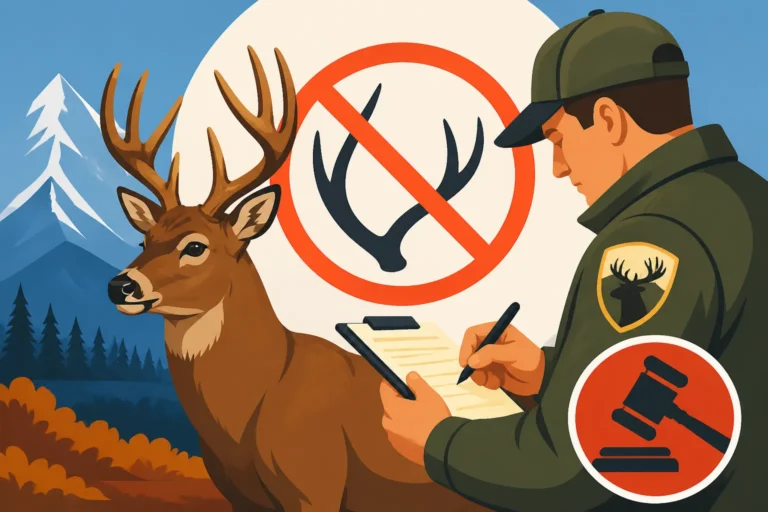
This is arguably the most important rule of thumb for any hunter operating under antler restrictions: When in doubt, pass. The financial penalties for harvesting a sublegal moose are severe, often including thousands of dollars in fines, confiscation of your meat, gear, and rifle, and loss of hunting privileges for several years. Beyond the legal ramifications, there's the ethical burden of taking an animal illegally.
If you've glassed the bull, applied all your judgment techniques, and still feel that nagging uncertainty, let him walk. There will always be another legal bull, another season. That momentary regret of passing on a potential trophy pales in comparison to the long-term regret and consequences of a citation. This philosophy is elaborated upon in posts like Mistaking a Legal Bull for a Sublegal One, which emphasizes the moral and practical benefits of patience.
Consequences of a Misjudgment
The penalties for violating Alaska's antler regulations are serious. For harvesting a sublegal moose, you could be facing:
- Hefty Fines: These can range from hundreds to thousands of dollars, depending on the severity of the violation and whether it was deemed intentional.
- Forfeiture: Your rifle, hunting gear, and the illegally harvested meat can all be confiscated. Imagine losing your prized hunting rifle because of a bad judgment call.
- Loss of Hunting Privileges: You could lose your right to hunt in Alaska, and potentially in other states via interstate compacts, for multiple years. This is a devastating blow for any passionate hunter.
- Reputational Damage: Your name could be published as a violator, bringing public scrutiny and damage to your standing in the hunting community.
These are not trivial consequences. They are a stark reminder of why understanding and adhering to the rules, especially those concerning antler restrictions like the 50-inch rule or the specific definitions in Alaska Moose Antler Restriction Areas, is not just about legality, but about preserving your right to hunt and the integrity of the sport. As we often discuss, Why Antler Restriction Hunts End in Citations is rarely malicious intent, but rather a lapse in judgment or insufficient preparation.
The key to a successful and ethical moose hunt in Alaska lies not just in your shooting skills, but in your ability to be a diligent, responsible, and knowledgeable hunter. Take the time to understand the rules, practice your field judging, and always, always err on the side of caution.
Common Alaska Moose Antler Rules & Visual Cues
| Rule | Definition & Purpose | Key Visual Cues for Field Judging |
|---|---|---|
| 50-Inch Spread | Main beam spread must be at least 50 inches wide. Protects younger bulls. | Antlers extend significantly beyond bull's body width; compare to rifle length (~40-45 inches). Needs to be at least 1.5x body width. |
| Spike-Fork | At least one antler must be a spike or forked. Protects specific age classes. | One antler has a single unbranched point (spike) OR one clear branch/fork. Look for absence of complex palmation. |
| Brow Tines | At least 3 (or 4, depending on unit) brow tines on one side. Protects mature bulls. | Count distinct points extending forward from the lower main beam, ensuring they meet minimum length (e.g., 3-4 inches). |
| "Either-Sex" Unit | Any bull is legal. | No antler restrictions apply. Verify your GMU is truly "either-sex." |
Disclaimer
The information provided in this guide is for general informational purposes only and is not a substitute for the official Alaska Department of Fish and Game (ADF&G) hunting regulations. Regulations can change annually and may vary significantly by Game Management Unit (GMU) and specific hunt number. Hunters are solely responsible for knowing and adhering to all current federal, state, and local hunting laws and regulations. Always consult the most current official ADF&G hunting regulation booklet for the specific area and species you intend to hunt. Failure to do so may result in fines, penalties, and forfeiture of hunting privileges and equipment.