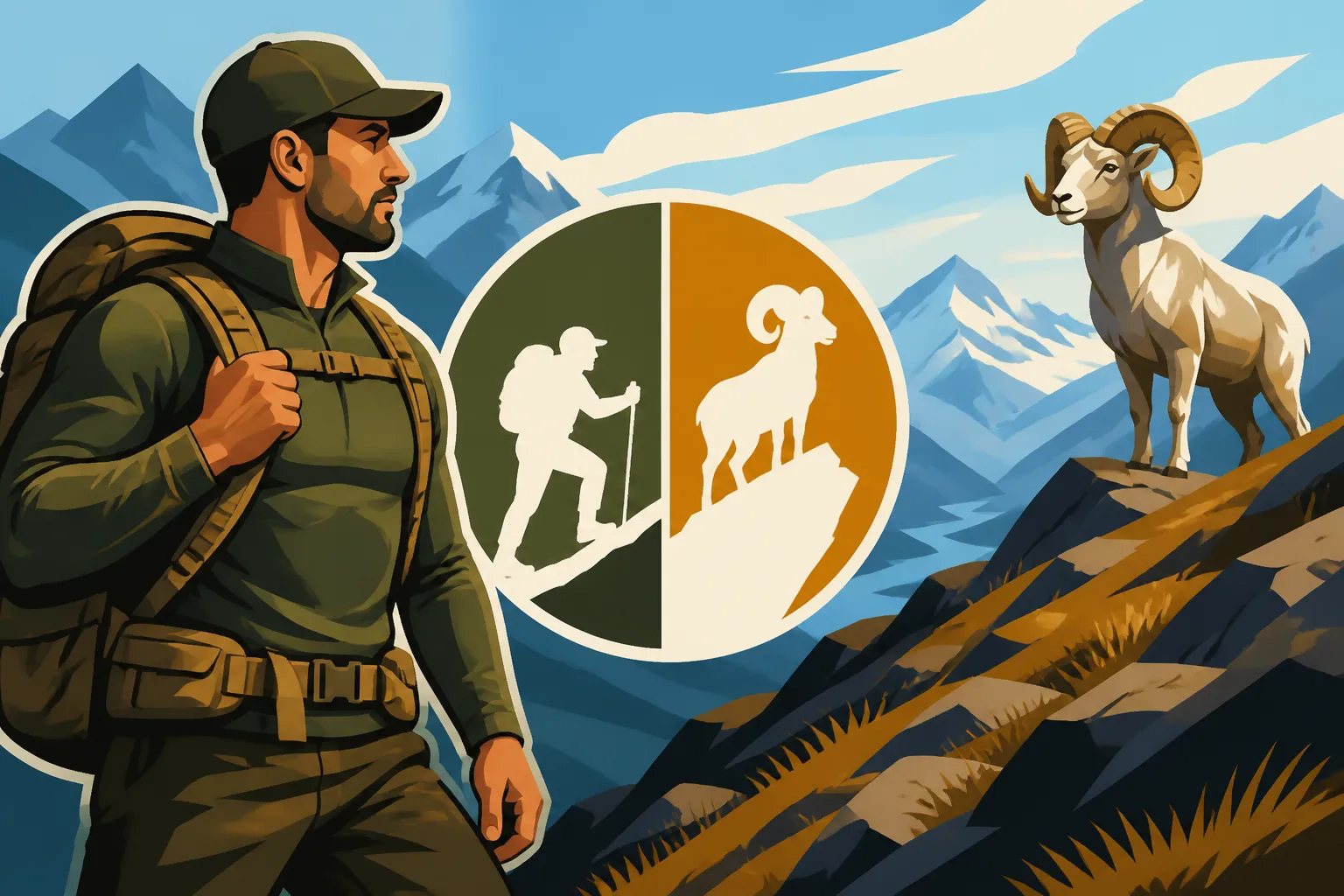
Fitness Expectations on an Alaska Sheep Hunt
So, you're dreaming of an Alaska Dall sheep hunt. You've seen the photos, read the stories, and perhaps even started looking into Booking an Alaska Sheep Hunt With a Guide. It's the ultimate mountain pursuit, a true bucket-list adventure. But let's get real for a minute: those stunning vistas and hard-earned rams don't come easy. Many hunters underestimate the sheer physical and mental grind involved, often leading to disappointment or even dangerous situations. This guide isn't here to scare you, but to give you a frank, realistic look at the fitness expectations for an Alaska sheep hunt, so you can prepare properly and truly enjoy the experience when the time comes.
The Reality of Alaska Sheep Country
Forget your local hiking trails; Alaska's sheep country is a beast of its own, demanding respect and thorough preparation. It’s not just beautiful; it’s wild, unforgiving, and utterly relentless. Understanding what you’re up against is the first step in preparing your body and mind.
Vertical Gain and Rugged Terrain
Imagine climbing a staircase that never ends, only this staircase is made of loose scree, sharp shale, and moss-covered boulders, often at an angle that feels nearly vertical. Dall sheep thrive in the craggy, high-alpine environments of ranges like the Chugach, Wrangells, and Alaska Range. This isn't rolling hills; this is straight up and straight down. You’ll be navigating steep ascents that burn your lungs and quads, followed by descents that hammer your knees and test your ankle stability. Every step needs to be deliberate, every foothold carefully chosen. A single misstep can lead to a tumble, and in this terrain, a tumble can be severe. Hunters often spend days simply gaining elevation, working their way into basins and then climbing out again to get a better vantage point for Reading Sheep Country From a Glassing Knob. The constant, varied stress on your body is unlike anything most people encounter in their daily lives.
Weather's Unpredictability
One minute the sun is beating down, the next a storm rolls in, dropping temperatures, visibility, and your morale. Alaska's weather in the high country is notoriously fickle. You might start your day sweating in a t-shirt, only to be donning every layer you own, including rain gear, before lunch. Snow can fall even in August, turning already treacherous footing into a slick, icy hazard. High winds can make simply standing upright a battle, let alone trying to glass effectively or maintain your balance on a narrow ridge. Being physically fit means you can better withstand the cold when you’re wet, move more efficiently to stay warm, and handle the mental drain of constant exposure without your body breaking down. This constant battle against the elements adds another layer of physical and mental taxation that often goes unappreciated until you're living it.
Remote and Unforgiving Environment
Unlike a day hike with a ranger station nearby, an Alaska sheep hunt takes you deep into genuine wilderness. Help is days, sometimes weeks, away. Every decision, every piece of gear, and every ounce of your physical capability becomes critical because you are largely self-sufficient. There are no convenience stores, no paved roads, and often, no cell service. This extreme remoteness means you must be strong enough to carry everything you need to survive, navigate, and, hopefully, pack out a ram. An injury that might be a minor inconvenience closer to civilization can become life-threatening when you're days from help. Your fitness isn't just about bagging a ram; it's about self-preservation and the ability to contribute to the safety of your hunting party.
Essential Physical Demands of a Sheep Hunt
Let's get specific about what your body will be asked to do on a sheep hunt. It's not just about being "in shape"; it's about being in sheep hunting shape, which is a very particular kind of readiness.
Sustained Hiking with a Heavy Pack
This is probably the single biggest physical demand. You'll spend days, sometimes weeks, on your feet, often covering significant distances over extremely difficult terrain. But it's not just walking; you'll be doing it with a heavy pack on your back. Initially, your pack will weigh upwards of 40-60 pounds, carrying all your camp gear, food, water, and emergency supplies. Once you harvest an animal, that weight skyrockets. A Dall ram can yield a significant amount of meat, along with the cape and horns. You might be looking at pack loads well over 100 pounds for the pack out, especially if you're Packing a Ram Off a Cliff Face or navigating tricky descents. You need the strength to hoist that pack, the core stability to keep your balance, and the endurance to carry it for miles, often over several days. This isn't a single sprint; it’s a marathon that requires sustained effort.
Uphill Grinds and Steep Descents
The very nature of sheep hunting means you’ll be constantly gaining and losing elevation. Those "uphill grinds" are where your cardiovascular system gets pushed to its absolute limit. You'll be gasping for air, your heart pounding, as you try to gain elevation quickly to get eyes on a new basin or cut off a moving band of rams. It’s relentless. Then come the "steep descents," which, while perhaps less aerobic, are equally demanding on your body. Your knees, ankles, and quads will take an incredible pounding as you try to control your momentum on loose rock and uneven ground. This constant, jarring impact can lead to fatigue, muscle strain, and potential injury if your supporting muscles aren't up to the task. It's often the descents that truly humble a hunter who focused only on climbing fitness.
Field Dressing and Meat Hauling
Killing the animal is only half the battle; getting it off the mountain is often the hardest part, both mentally and physically. Packing Out Meat in Alaska: The Salvage Law Hunters Must Follow means you are committed to bringing out all edible meat, which is a lot. Field dressing a ram, especially in cold or wet conditions, requires dexterity, focus, and physical strength to manipulate the carcass. Then comes the real work: dividing the meat, caping the head, and getting it into game bags. This is often done in awkward positions, on steep slopes, or in pouring rain. Each load of meat, horns, and cape needs to be secured to your pack frame, often requiring significant effort and technique. You'll feel every pound as you slowly make your way down the mountain, often in the dark, knowing that bears are never far off when there's fresh meat around.
What Kind of Fitness Prepares You
Being "fit" is a broad term. For a sheep hunt, you need a very specific kind of fitness that goes beyond what you might achieve in a typical gym routine.
Cardiovascular Endurance is King
While strength is important, your cardiovascular endurance—your ability to sustain effort for long periods—is absolutely paramount. You can be the strongest person in the gym, but if you can't hike uphill for hours without collapsing, you won't last long in sheep country. This means training your heart and lungs to work efficiently under duress. Think long, slow distance cardio mixed with intense interval training. It's not just about running a 5K; it's about hiking for 8-12 hours a day, day after day, through varying elevation and rough terrain. When you're constantly pushing your aerobic limits, your ability to think clearly, make good decisions, and recover for the next day's climb directly relates to your cardio fitness. This is what truly enables you to pursue a ram across multiple basins.
Strength for Stability and Carrying
While cardio is king, strength is the loyal knight. You need strong legs, especially your quads, hamstrings, and glutes, for those relentless climbs and punishing descents. But don't neglect your core. A strong core provides stability, protecting your back from injury when carrying heavy loads and helping you maintain balance on uneven ground. Strong shoulders and back muscles are crucial for comfortably bearing a heavy pack for extended periods. Focus on functional strength training: lunges, squats, deadlifts, step-ups, and farmer's carries. These exercises mimic the movements you'll make in the mountains and build the real-world strength that will prevent injury and keep you moving forward.
Mental Fortitude and Resilience
This is often the most overlooked, yet perhaps most critical, aspect of sheep hunting fitness. Alaska sheep hunts are as much a mental game as they are physical. You will be cold, wet, tired, frustrated, and possibly even hungry. You'll face storms, blown stalks, and days where you see no sheep, or only sublegal rams. The ability to push through discomfort, maintain a positive attitude, and keep making good decisions when your body is screaming at you to quit is what truly defines a successful sheep hunter. This mental toughness is built through consistent, challenging physical training where you push past your perceived limits, and by embracing discomfort in your preparation. It’s about being stubborn and refusing to give up, even when it feels like the mountains are winning. You might even find yourself calling a guide from a service like BookYourHunt or looking up research on GoHunt for tactics to mentally prepare for the long haul.
Training Strategies and Practical Advice
Knowing what's expected is one thing; actually preparing for it is another. Here's how to build that specific kind of fitness.
Year-Round Commitment
This isn't a fitness plan you start a month before your hunt. Sheep hunting fitness requires a year-round commitment. Begin with a solid base of general fitness, then gradually increase intensity and specificity as your hunt date approaches. Think of it as an ongoing lifestyle, not a temporary crash course. By consistently working out, you build a foundation that makes ramping up for the hunt much less daunting. This long-term approach also helps prevent injury, as your body adapts gradually to the increasing demands. Trying to cram all your training into a few months will likely lead to burnout or injury, precisely what you don't need before a trip of a lifetime.
Simulating Hunt Conditions
The best way to train for sheep hunting is to simulate sheep hunting as closely as possible. This means getting out of the gym and into the hills.
- Rucking: Regularly hike with a loaded backpack, gradually increasing the weight until you're carrying what you expect to pack out. Find the steepest trails you can.
- Varied Terrain: Don't just stick to paved paths. Seek out rocky, uneven terrain, mud, snow, and steep slopes. Practice scrambling over boulders and traversing loose ground.
- Adverse Weather: Don't let a little rain or cold stop your training. Embracing discomfort during training builds both physical and mental resilience. If you can hike for hours in the rain with a heavy pack at home, you'll be much better prepared when it happens in Alaska.
- Back-to-Back Days: Schedule training sessions on consecutive days to mimic the multi-day grind of a hunt. This trains your body to recover quickly and perform under accumulated fatigue.
Gear Familiarization
Your gear is an extension of your body, and you need to be intimately familiar with it before the hunt.
- Boots: Break in your boots completely. Hike countless miles in them. New boots on a sheep hunt are a recipe for painful blisters and potential hunt-ending foot issues.
- Pack: Practice loading and unloading your pack. Adjust the fit to ensure maximum comfort and efficiency under heavy loads. Know where everything is.
- Rifle: Practice shooting from various field positions that mimic what you might encounter in sheep country, such as steep uphills, downhills, and uneven ground. Consider training for Shooting Positions on Alaska Tundra and Sidehills. Don't just shoot from a bench rest. Being physically exhausted can affect your shooting accuracy, so practice when fatigued.
Nutrition and Hydration in Training
Fueling your body properly during your training is just as important as the workouts themselves.
- Balanced Diet: Focus on whole, unprocessed foods that provide sustained energy. Protein for muscle repair, complex carbohydrates for endurance, and healthy fats for overall health.
- Hydration: Stay well-hydrated throughout your training. Practice carrying and purifying water on your training hikes, just as you would in the field. Understanding your body's hydration needs will be crucial when you're actually out there.
- Trial Run Food: Experiment with the types of food you plan to bring on your hunt during your training. See how your body reacts to various energy bars, dehydrated meals, and snacks. You want to ensure they provide adequate energy and don't cause digestive issues.
Here's a quick look at how different fitness components contribute to a successful sheep hunt:
| Fitness Component | Key Activities on a Sheep Hunt | Importance Level | Training Focus |
|---|---|---|---|
| Cardiovascular Endurance | Sustained uphill hiking, covering miles of varied terrain, recovering | High | Long-distance rucking, trail running, interval training on inclines. |
| Leg Strength | Steep ascents/descents, scrambling, carrying heavy pack over uneven ground | High | Squats, lunges, step-ups (weighted), box jumps, hill sprints. |
| Core Strength | Maintaining balance with heavy pack, stability on loose ground, bending | High | Planks, Russian twists, medicine ball rotations, deadlifts. |
| Back & Shoulder Strength | Carrying heavy pack, lifting gear, maneuvering carcass | Medium-High | Pull-ups, rows, overhead press, farmer's carries (with pack). |
| Ankle/Knee Stability | Traversing scree, side-hilling, preventing injuries on uneven ground | High | Single-leg exercises, balance board work, hiking on varied terrain, proprioception drills. |
| Mental Fortitude | Pushing through fatigue, discomfort, frustration, maintaining focus | Highest | Deliberately pushing past comfort zones in training, cold exposure, long, solo hikes. |
Preparing for an Alaska Dall sheep hunt is a serious undertaking, but it's also incredibly rewarding. By understanding the physical demands and committing to a rigorous, hunt-specific training regimen, you'll not only increase your chances of success but also ensure a safer, more enjoyable experience in some of the most stunning and challenging country on earth. Don't let your dream hunt turn into a nightmare because you underestimated the mountains. Train hard, train smart, and you'll be ready for the adventure of a lifetime. Remember, the ram is just one part of the experience; the journey itself, the physical and mental challenge, is where the true reward lies. Good luck with your preparation, and I hope to see you high on the mountain one day!
Disclaimer
This article is for general informational purposes only and does not constitute professional advice. Laws, prices and regulations vary by location and change over time. Consult a qualified professional for guidance on your specific situation.