Access Easements Across Alaska Private Land
There's nothing quite like poring over maps, eyes wide with possibility, spotting that perfect, remote drainage or a promising ridge line that just screams "big game." But then, a cold splash of reality: you zoom in a little closer, and suddenly, what looked like a clear shot to public land is actually landlocked by a solid block of private property, often Native Corporation land. It's a frustrating, all-too-common scenario for Alaska hunters. We see the game, we know it's there, but the thought of legal access feels like navigating a minefield. This guide is here to demystify those thorny issues, specifically focusing on how access easements across private land might just be your lifeline to those coveted hunting grounds.
Understanding the Alaska Landscape: Why Easements Are So Critical
Alaska's land ownership is a complex tapestry, a real checkerboard that can make even the most seasoned hunter scratch their head in confusion. Unlike many Lower 48 states with vast, contiguous blocks of federal land, Alaska's history of land transfers – from the Alaska Native Claims Settlement Act (ANCSA) to statehood selections – has resulted in a mosaic of state, federal, and privately-owned parcels, often intertwined in bewildering ways. This isn't just an inconvenience; it's a fundamental challenge to accessing the wild country we all dream of hunting.
The Patchwork Quilt of Land Ownership
Imagine planning a sheep hunt in a mountain range, only to find that the only logical approach is cut off by a ribbon of private land, perhaps a Native allotment or a village corporation parcel. It happens constantly. These private lands aren't just little plots; they can be massive tracts, often strategically located along rivers, lakes, or historical travel corridors. This complex ownership means that just because you see public land on the horizon doesn't mean you can legally get there. Knowing the nuances of Land Status in Alaska: State, Federal and Native Corporation is paramount before you even pack your boots.
The frustration is real. You spend hours poring over maps, pinpointing promising areas for caribou or moose, only to discover that the vital five-mile stretch separating you from the promised land is owned by someone else. Without a legal right-of-way, that public land is effectively inaccessible, and any attempt to cross without permission is trespassing, with all the legal ramifications that entails.
The Need for a Legal Right-of-Way
In Alaska, "looks open on a map" is simply not good enough. You need a legally recognized right to cross private land to reach public hunting areas. This is where easements come into play. An easement is a legal right to use another person's property for a specific purpose, and crucially for hunters, some are established for public access. These aren't always marked with giant signs or clear trails; sometimes, they're just lines on a plat map, legally protecting your right to traverse certain areas. Understanding these rights, and how to identify them, can literally unlock vast hunting opportunities that would otherwise be off-limits. It's about having the knowledge to confidently say, "Yes, I have a legal right to be here," rather than relying on guesswork and hoping for the best.
Navigating Easement Types: What Hunters Need to Know
When it comes to accessing landlocked public hunting grounds in Alaska, not all easements are created equal. Understanding the different types, and what they mean for a hunter, is crucial. It’s like knowing the difference between a cow track and a game trail – both lead somewhere, but one is a lot more reliable for your immediate goal.
Section Line Easements: Your Potential Unimproved Corridor
One of the most important types of easements for public access in Alaska are the section line easements. These are typically 50-foot wide corridors reserved by federal law along section lines (the north-south and east-west lines that divide land into square-mile sections, common in surveyed areas). They were established to ensure public access to public lands that might otherwise become landlocked by private ownership.
Historically, when Alaska lands were surveyed, a right-of-way for public travel was reserved across private property along these section lines. The key thing to remember is that these easements are often unimproved. This isn't a guaranteed road or even a well-worn path. In fact, it's frequently just a legal line on a map, crossing dense brush, marshland, or even rivers. You might find yourself bushwhacking through thick willows, wondering if you're truly on the "easement." The challenge lies in finding and physically traversing them. For hunters, this means you might have the legal right to cross, but you'll still need to put in the effort to make that crossing, often with a chainsaw or a significant amount of sweat equity. Despite the difficulty, knowing that these statutory easements exist gives you a powerful tool for planning your hunt and potentially reaching otherwise inaccessible areas.
Prescriptive Easements: A Legal Gray Area for Hunters
While theoretically possible, prescriptive easements are rarely a reliable or advisable access route for hunters to plan around. A prescriptive easement is gained by continuous, open, notorious, and adverse use of someone else's land for a statutory period (which varies by state, but in Alaska is generally 10 years). Think of it as gaining access rights through long-term, unchallenged use, similar to adverse possession but without gaining ownership of the land itself.
The problem for hunters is that establishing a prescriptive easement typically requires a court battle, and it's not something you can simply assume exists just because you've seen tracks there before. Relying on an unproven prescriptive easement for your hunting access is extremely risky. You could easily find yourself in a trespass situation, facing legal penalties and the potential loss of hunting privileges. It's far better to stick to clearly established public easements or secure explicit permission from landowners. Hunters should view prescriptive easements as a legal concept rather than a practical access strategy for their next hunt.
Express Easements and Public Access Agreements
Beyond the general section line easements, there are also express easements. These are created by a written agreement between a landowner and another party, or sometimes the public, for a specific purpose. This could be for utility lines, pipelines (like the Trans-Alaska Pipeline), or even specific agreements negotiated for public recreational access. While less common for general hunting access than section line easements, they do exist and can be vital.
For example, certain Native Corporations, while generally private lands, may enter into agreements or offer permits for access to specific areas, sometimes providing an express easement for that purpose. These aren't universal, and you absolutely cannot assume them. Each Native Corporation has its own policies, and contacting them directly to inquire about their specific access rules and permit requirements is the only way to go. Similarly, state or federal agencies might have negotiated express easements across private lands to access isolated public parcels, especially for recreational use. These are often site-specific and will be detailed in land records. Always check official sources like the Alaska Department of Natural Resources (DNR) mapping tools or contact local land management offices to identify if any such agreements exist for your chosen hunting area.
| Easement Type | Description | Hunter Relevance | Ease of Use |
|---|---|---|---|
| Section Line | 50-foot corridors reserved for public travel along surveyed section lines. | Crucial for accessing landlocked public land. | Often unimproved, requires bushwhacking, hard to find on ground. |
| Prescriptive | Rights gained by long-term, open, and adverse use; typically court-determined. | Do NOT rely on this for hunt planning. Risky, requires legal proof. | Extremely difficult; not a practical hunting access strategy. |
| Express | Written agreements for specific purposes (e.g., utility, public access). | Can provide vital access if negotiated for public use. | Varies greatly; requires research to identify specific agreements. |
| Public Access Agreements | Formal agreements, often with Native Corporations, for permitted access. | Essential for specific Native Corp. lands; requires permits. | Requires direct contact with the landowner and adherence to rules. |
Navigating Access: Research, Respect, and Readiness
Hunting in Alaska means being prepared for anything, and that includes being incredibly diligent about your access. There's no room for guessing games when it comes to property lines and legal rights-of-way. You need to approach this with the same meticulous planning you'd put into Backpack Hunting in Alaska: Gear Weight and Meat Loads or Sighting In Before You Fly to a Remote Alaska Camp.
Digital Tools and Mapping: Your Indispensable Pre-Hunt Allies
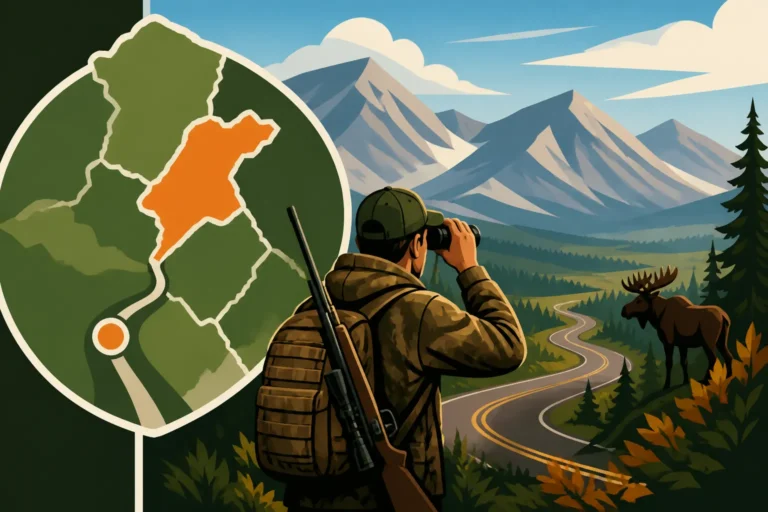
Before you even think about setting foot on what looks like public land, you absolutely need to consult a reliable mapping tool. I mean, we're talking about the difference between a successful, legal hunt and a costly citation for trespass. Tools like onX Hunt are game-changers here. They literally put land ownership boundaries right in your pocket, showing you not just state and federal land, but often even the private parcels, including Native Corporation lands and sometimes even Native allotments. This visual representation of property lines, right down to the quarter-section, is indispensable. You can toggle between different layers, see public and private holdings clearly, and identify potential section line easements or major utility corridors that might offer access.
Using these apps allows you to digitally scout your approach, identify choke points, and see where private land might block what looks like a straightforward route. This kind of pre-hunt research, often paired with satellite imagery, lets you map out a precise, legal entry and exit strategy for your hunting grounds. Don't underestimate the power of knowing exactly whose land you're looking at before you commit to a fly-in or a long hike.
Verifying Easement Status and Contacting Landowners
You've got to understand that just because an easement might exist on paper, it doesn't mean it's physically easy to traverse, or even marked. Sometimes, it’s just a line on a plat map, crossing thick timber or marshland. And then there's the question of whether it's truly a public access easement or a private one for a specific use. Don't assume. Always, and I mean always, try to verify the public nature of the easement. For state lands, the Alaska Department of Natural Resources (DNR) is your go-to. Their online mapping portal can be a bit clunky, but it's an invaluable resource for land status and easement information. You can often find details about statutory public easements there.
For Native Corporation lands, it's a completely different ballgame; you'll need to reach out directly to the corporation. Each of the regional and village corporations has its own rules and contact information. Some have very clear permitting processes, while others may not allow public access at all without a specific invitation. Respectful inquiry can open doors, whereas assumptions can slam them shut and land you in hot water. When you do contact a landowner, whether it's a private individual or a Native Corporation, be clear, concise, and respectful. State your intentions, ask specific questions about access, and be prepared for a "no." Even if a public easement exists, a courtesy call or letter can build goodwill and clarify any ambiguities on the ground. This proactive approach is key to How to Find Legal Access in Alaska.
The "Go-No-Go" Decision on Access and Ethical Conduct
A good hunt starts long before you ever set foot on the tundra or climb that mountain. It starts with planning, and a huge part of that planning in Alaska is ensuring legal access. Consider what GoHunt emphasizes about thorough research; it's not just about drawing permits, but understanding every facet of your hunt, including how you'll get there without breaking the law. If your research leaves you with any doubt about an easement, consider it a "no-go." The potential legal headaches and the damage to the reputation of all hunters aren't worth the risk.
Remember, as hunters, we are ambassadors for our sport. Trespassing, whether intentional or accidental due to poor planning, reflects poorly on everyone. Always err on the side of caution. If access proves too difficult, too ambiguous, or is denied, have a backup plan. This might mean finding an alternative route to the same public land, selecting a different hunt unit altogether, or even considering a different species. The vastness of Alaska means there are always other opportunities, even if your first choice is blocked. Ensuring clear, legal access is not just about avoiding a fine; it's about ethical hunting and preserving opportunities for all of us in the long run. When you're Scouting a Unit From Satellite Imagery Before You Fly, make access verification a core part of that process.
Disclaimer
This article is for general informational purposes only and does not constitute professional advice. Laws, prices and regulations vary by location and change over time. Consult a qualified professional for guidance on your specific situation.