How Long Blacktail Antlers Grow
It's incredibly exciting to think about the Sitka blacktail deer, especially when you're anticipating hunting season and wondering about the kind of antlers you might see out there. Many hunters, myself included, spend countless hours poring over maps and old photos, trying to understand what makes a good blacktail buck, and a huge part of that curiosity revolves around antler growth. It's not always straightforward, and the factors at play can be complex, leading to a lot of questions about how these coastal deer develop their headgear. This guide aims to pull back the curtain on the fascinating process of Sitka blacktail antler development, exploring the timelines, influences, and what you can realistically expect to encounter in the rugged Alaskan wilderness.
The Annual Cycle of Sitka Blacktail Antler Growth
Understanding how long Sitka blacktail antlers grow really boils down to grasping their annual cycle. Unlike horns, which are permanent, antlers are shed and regrown every single year. This cyclical process is a marvel of nature, driven by hormones, nutrition, and the deer's age. For blacktails, living in the often-harsh environments of coastal Alaska, this cycle is finely tuned to their environment.
Shedding and the Start of a New Cycle
The antler growth cycle for a Sitka blacktail buck typically begins in late winter or early spring when they shed their previous year's antlers. The exact timing can vary quite a bit, depending on the buck's individual health, age, and nutritional status. Generally, you might see antlers drop anywhere from late December through April. Older, healthier bucks might shed a bit earlier than younger, less robust deer or those that went through a particularly stressful rut.
After shedding, you'll notice two small, bony stumps on the buck's head, called pedicles. These pedicles are the foundation for the next year's growth. Immediately following the shed, these areas are raw and sensitive, but they quickly heal over as the new growth begins to sprout. It's a period of intense physiological activity for the deer, demanding significant energy resources to kickstart the new antler development.
For a hunter, finding a shed antler can be like finding a treasure. It gives you a tangible piece of data about a buck that survived the winter in that area, and perhaps a glimpse into the potential of what next year's antlers might look like. Think of it as a biological blueprint left behind, hinting at the potential of the deer population in a particular drainage or island.
Rapid Growth in Spring and Summer
Once the old antlers are shed, the new growth begins almost immediately, propelled by rising testosterone levels and the increasing availability of nutrient-rich forage in spring. This initial growth is encased in a soft, fuzzy covering known as velvet. This velvet isn't just for show; it's a living tissue rich with blood vessels and nerves that supply the rapidly growing bone structure beneath.
During the spring and early summer, Sitka blacktail antlers can grow at an astonishing rate. We're talking about a process that can add inches of length and significant mass in a matter of weeks. The antlers develop from the base of the pedicle upwards, gradually forming the main beam and then the tines. This period, from late April through July, is when most of the actual length and mass of the antler is formed. A buck's body is essentially working overtime to produce this bone structure, drawing heavily on calcium, phosphorus, and other minerals from its diet.
By late July and early August, the antlers have typically reached their full size and shape. You'll observe that the velvet starts to lose its plushness as the blood supply to the antlers diminishes. This signals the final stages of growth, where the antlers harden and mineralize, preparing for the shedding of the velvet. For more on what to look for during this time, consider checking out Deer Above Timberline in Early August.
Hardening and Shedding Velvet in Late Summer
The culmination of the antler growth cycle happens in late summer, usually in August or early September, when the velvet begins to shed. This process is driven by another surge in testosterone. The velvet dries, cracks, and peels away, often in ragged strips. It can look a bit grotesque, but it's a perfectly natural part of the cycle. Bucks will often help this process along by rubbing their antlers vigorously against saplings, brush, and small trees, polishing the now-hardened bone underneath. This rubbing activity also serves to mark their territory, spreading their scent and visually advertising their presence to other deer.
Once the velvet is completely shed, the antlers are "hard-horned" and ready for the rigors of the upcoming rut. They take on a polished, often dark, appearance, stained by the sap and tannins from the trees and brush the buck has rubbed against. These hard antlers will be carried through the breeding season, serving as weapons for sparring with rival bucks and as a display of dominance for does. Understanding this timeline is key for hunters planning their trips, as the appearance of antlers changes dramatically throughout the season.
The antlers will remain on the buck's head through the rut, which typically peaks in November for Sitka blacktails, as discussed in Blacktail Rut Timing in Southeast Alaska. After the intense physical demands of the rut and as winter sets in, testosterone levels drop, triggering the process of antler shedding once again, completing the annual cycle.
Factors Influencing Antler Size and Development
While the annual growth cycle is consistent, the size and quality of Sitka blacktail antlers can vary dramatically. Several key factors interact to determine just how impressive a buck's rack will be, and understanding these can help you better assess the deer you encounter in the field.
Age of the Buck: The Primary Driver
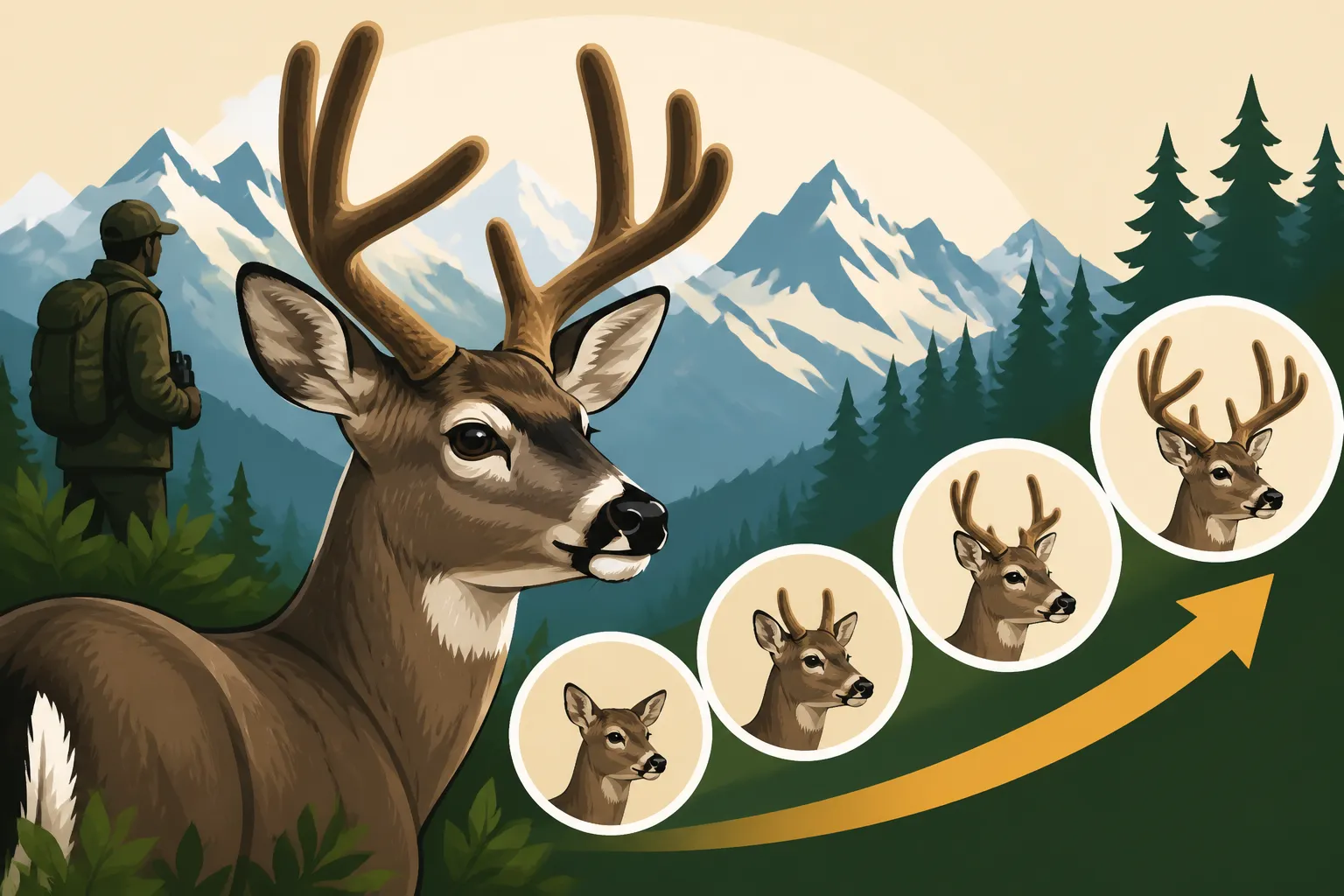
Without a doubt, the single most important factor influencing antler size is the age of the buck. A young buck, say a yearling, might only grow spike antlers or small fork horns. As the buck matures, typically reaching its prime between 4 and 7 years old, its antlers will generally increase in mass, length, and tine development. This is when a buck has reached its physical maturity, dedicating more energy to antler production rather than just body growth.
Think about a human athlete: they don't reach their peak performance in their teen years; it takes years of development. Similarly, a Sitka blacktail buck needs time to develop the skeletal structure and physiological efficiency to produce a truly impressive rack. A two-year-old might have decent antlers, but a five-year-old in the same area will almost always sport a larger, more complex rack, assuming all other factors are equal. This is why when you're glassing a remote ridge or scanning a beach, assessing the buck's apparent age is often the first step in judging its antler potential.
After a buck passes its prime, usually around 8 or 9 years old in wild populations, antler size can begin to decline. This phenomenon, often called "going downhill," means the antlers might become smaller, less massive, or even revert to simpler configurations, as the buck's body prioritizes survival over extravagant antler growth.
Nutrition and Habitat Quality
Even an older buck won't grow large antlers if it's not getting enough to eat, or if the nutrition it does get is poor quality. Sitka blacktails, especially those in the lush but nutrient-variable coastal rainforests of Southeast Alaska, are highly dependent on the quality of their forage. A diet rich in protein, minerals (like calcium and phosphorus), and overall energy is crucial for robust antler development.
Deer living in areas with abundant, high-quality forage — perhaps a younger clear-cut with plenty of browse, or a sheltered valley with a diverse understory — will have the nutritional building blocks to grow bigger antlers. Conversely, deer in areas with poor habitat, or those that have endured prolonged periods of nutritional stress, like during a severe winter, will likely produce smaller, less developed racks. It's a direct reflection of the resources available to them. For example, deer on Kodiak Island or Prince of Wales Island, often known for good populations, generally have access to better year-round browse and milder winters compared to some of the more inland or high-elevation populations.
A good example of how habitat impacts deer can be seen in areas recovering from significant environmental changes. If an area experiences a healthy regrowth of specific browse species, you might see an uptick in antler quality within a few years as the deer herd benefits. This is a dynamic process, and understanding habitat types, perhaps through tools like those offered by GoHunt for studying specific units, can give you insights into the local deer population's potential.
Genetics: An Often Underestimated Factor
While age and nutrition are massive players, genetics also undeniably play a role in antler potential. Just like in humans, where some individuals are predisposed to be taller or more muscular, some deer carry genes that allow them to grow larger or more aesthetically pleasing antlers. This isn't to say that a genetically superior buck will grow huge antlers on a poor diet, but given optimal conditions, genetics can be the differentiator between a good rack and a truly exceptional one.
In wild populations, managing genetics is extremely challenging, as we can't control which bucks breed which does. However, selective harvesting by hunters over many years can indirectly influence the genetic pool, though this is a slow and complex process. Most wild deer management focuses more on managing habitat and population density, as these are more directly controllable and have a broader impact.
It's also worth noting that the inherent characteristics of Sitka blacktail deer mean their antlers are generally smaller and less complex than, say, Rocky Mountain mule deer. While they can grow impressive racks within their species, managing expectations is key. For a comparative look at their size, you might find Sitka Blacktail Deer Weight Compared to Mule Deer interesting.
Field Judging Antler Growth for Hunting Decisions
When you're out in the Alaskan bush, whether it's Hunting Sitka Blacktail Deer in the Alpine Before Snow or still-hunting timber, you rarely have the luxury of perfectly clear, close-up views. Field judging antler growth is a skill honed over time, combining knowledge of antler development with keen observation under often challenging conditions.
Estimating Age by Antler Characteristics
Many hunters try to estimate a buck's age by its antlers, and while it's a useful exercise, it's not an exact science, especially with blacktails. Generally, younger bucks tend to have thinner beams and shorter tines, often with a "spike-fork" configuration or a basic two-point rack on each side. As bucks mature, their antlers usually gain mass (circumference) and length, and can develop more points. A prime-age buck (4-7 years old) might display a wider spread, heavier beams, and well-defined tines.
However, antler characteristics can be misleading. A young buck on excellent feed might have a larger rack than an older, stressed buck in a poor habitat. Conversely, a genetically inferior but older buck might never grow a truly impressive rack. The regulations in Alaska often focus on specific legal definitions, such as "spike-fork" or minimum brow tine counts, which makes precise age estimation less critical than knowing the legal minimums. Always prioritize the legal definition of a shootable buck over a rough age estimate based solely on antler appearance.
One common mistake is to judge a buck solely by its number of points. While a higher point count can indicate maturity, a buck with heavy, short main beams and only two or three points per side might be an older, more desirable animal than a younger buck with spindly, long points. Mass is often a better indicator of age and maturity than point count alone.
Observing Seasonal Changes in Antler Appearance
Beyond just size, the appearance of a blacktail's antlers changes dramatically throughout the hunting season, and recognizing these differences is crucial for field judging. Early season hunters, typically in August, will likely encounter bucks still in velvet or just starting to shed it. As mentioned, velvet-covered antlers appear soft, fuzzy, and often larger due to the velvet's thickness. Once the velvet is shed, the antlers transform into hard, bony structures. They'll look cleaner, darker, and more defined.
A buck with freshly shed velvet might have bloody or raw spots on its antlers, especially around the base and tips. Over the next few weeks, as the buck rubs and polishes its rack, these blemishes disappear, and the antlers take on their characteristic polished look. Later in the season, particularly during the rut, antlers can show signs of wear and tear from sparring with other bucks. Tine tips might be broken, or beams could be chipped. This damage provides a narrative of the buck's recent activities and challenges.
Understanding these seasonal visual cues helps immensely. A buck with clean, dark, hard antlers in September is very different from one still sporting velvet in early August. These distinctions are not just aesthetic; they reflect the buck's current physiological state and readiness for the breeding season.
Managing Expectations for Alaska Blacktail Antler Size
It's important for hunters, especially those new to Alaska or Sitka blacktails, to manage their expectations regarding antler size. Sitka blacktails, as a subspecies, are generally smaller-bodied and tend to grow smaller antlers than other deer species like mule deer or even the larger whitetail subspecies found in the Lower 48. A truly exceptional Sitka blacktail rack might have a 20-24 inch spread with good mass and solid tines, but that's a rare animal. Many mature bucks will have spreads in the 14-18 inch range.
The sheer difficulty of hunting these deer in their rugged, often rain-soaked coastal environment, combined with the general size characteristics of the species, means that any legal buck is a significant accomplishment. The experience of hunting a Sitka blacktail, whether it's navigating remote islands or climbing through dense timber, often outweighs the focus on Boone and Crockett scores. The meat, which is incredibly lean and flavorful, is often the primary trophy for many Alaskan deer hunters.
So, while it's fun to dream of giant antlers, approach your blacktail hunt with an appreciation for the animal and its environment. Any buck taken in coastal Alaska represents a memorable challenge and a freezer full of delicious wild game. Using resources like GoHunt to research harvest reports and antler trends in specific game management units can also help set realistic expectations for your chosen hunting area.
The Impact of Environment and Population Dynamics
The environment in which Sitka blacktail deer live is perhaps one of the most defining factors in their overall health and, consequently, their antler growth. Alaska's coastal regions present a unique set of challenges and opportunities that directly influence how long blacktail antlers grow and how robust they become.
Deep Snow Winters and Antler Growth
One of the most significant environmental stressors for Sitka blacktail deer is a deep snow winter. While coastal Alaska is known for milder temperatures compared to the Interior, some years bring heavy, persistent snowfalls, particularly in mountain drainages or high-elevation areas. When snow accumulates deeply and stays for extended periods, it limits a deer's access to vital forage. They burn more energy simply moving through the snow, and finding food becomes a desperate struggle.
A harsh winter can have a profound carry-over effect on a buck's antler growth in the following spring and summer. If a buck spends all its energy just surviving, its body will prioritize basic metabolic functions over secondary features like antler development. This can result in smaller antlers, less mass, or even deformities in the subsequent year. It's a direct trade-off: energy expended on survival cannot be used for optimal antler growth. This phenomenon is often observed when Deep Snow Winters and Alaska Deer Die-Offs occur, and even the surviving deer show the impacts in their physical condition.
Hunters often track winter severity because they know it directly impacts the health of the deer herd and the antler quality they can expect. A series of mild winters, coupled with good forage, can lead to a noticeable increase in overall antler size across a population.
Population Density and Competition
The number of deer living in a given area also plays a crucial role in antler development. If a population grows too dense for the available habitat, competition for food becomes intense. Even if the habitat is generally good, an overabundance of deer means that individual animals might not get enough high-quality nutrition to reach their full potential, both in body size and antler growth.
High population densities can lead to a phenomenon known as "stunted growth," where deer remain smaller than they would otherwise be, and bucks consistently produce smaller antlers. This is a common challenge in some areas, and wildlife managers often use hunting regulations to help keep deer populations in balance with their habitat. When density is reduced, remaining deer often have access to more food, which can lead to healthier animals and larger antlers over time.
For hunters, understanding population dynamics in a specific hunting unit is a vital piece of the puzzle. Areas with consistently high deer numbers might offer more opportunities to fill a tag, but the chances of finding a truly large-antlered buck might be lower due to resource competition. Conversely, areas with lower densities but excellent habitat might produce fewer deer sightings but potentially higher quality bucks.
Understanding Management Unit Differences
Alaska is vast, and its diverse geography means that Sitka blacktail deer populations and their antler growth can vary significantly from one game management unit (GMU) or even sub-unit to another. Factors like climate, predator pressure, and habitat type contribute to these regional differences. For instance, the deer on specific islands of Southeast Alaska might experience different growth patterns compared to deer found on the outer coast of Prince William Sound, or even on the Kodiak Archipelago.
Take, for example, Deer Populations on Prince of Wales Island. Due to its unique habitat and historical management, deer on Prince of Wales might exhibit different antler characteristics or population health trends than those on, say, Chichagof Island. Similarly, areas with sustained logging activity might create abundant early-successional browse that benefits deer, leading to better antler growth for a period, before the forest canopy closes in again.
Hunters serious about understanding blacktail antler potential will often spend time researching specific units, looking at harvest reports, and consulting with local biologists or experienced hunters. This hyper-local approach to understanding the environment is essential, as what holds true for one island might not apply to another. It's not just about finding any deer; it's about understanding the nuances that define their lives, and ultimately, the antlers they carry. The more you learn about the specific region you plan to hunt, the better equipped you'll be to interpret the antler growth you observe.
Here's a quick overview of the typical Sitka blacktail antler growth timeline:
| Antler Stage | Typical Timing (Coastal Alaska) | Key Characteristics |
|---|---|---|
| Antler Shedding | Late December – April | Old antlers fall off; pedicles exposed and sensitive. |
| Velvet Growth (Early) | March – June | New antlers sprout from pedicles, covered in soft, blood-rich velvet; rapid length and mass accumulation. |
| Velvet Growth (Late) | July – Early August | Antlers reach near-full size in velvet; mass continues to develop; velvet starts to lose blood supply. |
| Velvet Shedding | Mid-August – Early September | Velvet dries and peels off; bucks rub antlers to remove remaining velvet and polish bone. |
| Hard Antlers | September – December | Antlers are hard, polished bone; used for sparring during the rut; maximum display. |
Disclaimer
This article is for general informational purposes only and does not constitute professional advice. Laws, prices and regulations vary by location and change over time. Consult a qualified professional for guidance on your specific situation.