Submitting a Proposal to the Alaska Board of Game
It’s a familiar scenario for many Alaska hunters: you’re out in the field, maybe chasing caribou across the tundra or glassing for moose in a willow-choked drainage, and you notice something. Perhaps a season seems misaligned with animal behavior, or a regulation creates an unnecessary hurdle for ethical harvest, or conversely, a particular area feels over-pressured. It’s easy to grumble about it around the campfire, but what if you could actually do something? This guide is designed to empower you to turn those observations into actionable change, showing you precisely how to submit a formal, compelling proposal to the Alaska Board of Game and make your voice heard in shaping the future of Alaska hunting.
Understanding the Power of Your Voice in Alaska's Wildlife Management
Many hunters feel disconnected from the decision-making process, often viewing regulations as static rules handed down from on high. However, Alaska's system is uniquely designed to incorporate public input, and your firsthand experiences in the vast wilderness are incredibly valuable. The Alaska Board of Game exists to manage the state's wildlife resources for sustained yield and public benefit, and they actively solicit input from all stakeholders, especially hunters who are on the ground, witnessing the realities of game populations and habitat firsthand.
Bridging the Gap Between Field and Regulation
The Alaska Department of Fish and Game (ADF&G) biologists gather extensive data, but even the most dedicated professionals can't be everywhere. That's where you come in. Your observations from a particular hunting unit – whether it's concerns about declining numbers of Sitka blacktail deer on Prince of Wales Island, an unusually early moose rut in the Interior, or an access issue along a specific river – provide critical ground-truthing that supplements scientific surveys. Your proposal isn't just a complaint; it's a data point, an informed perspective that helps paint a more complete picture of what's happening in specific areas. It's the mechanism that translates your on-the-ground knowledge into potential policy adjustments.
The Board’s overarching mandate is complex, balancing biological sustainability with hunter opportunity, subsistence needs, and broader public interest. A well-researched proposal helps them in this balancing act. For instance, if you've been seeing an increased number of cows with calves in a specific region of Unit 13A, suggesting a modification to cow moose harvest limits could come directly from your observations. The Board needs this nuanced input to ensure regulations remain dynamic and responsive to ever-changing environmental and population conditions.
Impacting Season Dates and Bag Limits
Ultimately, your proposals can lead to tangible changes in the hunting regulations. This isn't just theory; many current regulations, from specific antler restrictions in certain areas to modifications of bear baiting seasons, originated from hunter proposals. Imagine noticing that the traditional opening day for caribou season consistently falls before a significant portion of the herd has migrated into an accessible area. A proposal outlining this pattern, backed by your observations and possibly local weather data, could prompt the Board to shift the season dates, aligning them more effectively with animal movement and hunter success. This directly influences How Alaska Sets Its Hunting Seasons and ensures opportunities are maximized within sustainable limits.
Proposals can address a wide array of topics. You might advocate for changes to bag limits on black bears in an area experiencing high predation pressure on moose calves, or suggest adjustments to the length of a trapping season for wolves. Perhaps you’ve identified a particular game management unit where existing antler restrictions, like the "spike-fork" rule, are leading to too many sublegal bulls being passed up, and you believe a different approach is warranted. By articulating these specific issues and suggesting practical solutions, you directly contribute to making the rules work better for both wildlife and the hunting community. It’s about more than just complaining; it’s about participating in the stewardship of Alaska’s incredible resources.
The Anatomy of an Alaska Board of Game Proposal: From Idea to Submission
So, you've identified an issue and you're ready to make a difference. The next step is transforming that good intention into a formal, well-structured proposal. This process requires careful thought, diligent research, and clear communication. Remember, the Board members are reading dozens, sometimes hundreds, of proposals, so clarity and substance are paramount.
Researching and Identifying the Problem
Before you put pen to paper, it's absolutely crucial to do your homework. A vague complaint like "there aren't enough moose" isn't going to get traction. You need to identify the specific regulation that needs changing, or a new regulation that needs to be created. For example, is it a specific season date? A bag limit? A method of take? An access restriction? You need to be able to cite the current regulation (e.g., "5 AAC 85.055. Hunting seasons and bag limits for moose in Unit 20A") and then propose a precise amendment to it.
This is where services like GoHunt can be a fantastic resource. GoHunt provides detailed data on past harvest reports, regulation changes, and insights into specific game management units, which can help you understand the historical context and potential impacts of your proposed change. Diving into their archives or regulatory summaries can inform your argument and ensure you're not proposing something that has already been tried and failed, or that directly contradicts existing biological data. Beyond that, scour the Alaska Department of Fish and Game (ADF&G) website for biological reports, past Board of Game findings, and harvest statistics. The more data you can bring to bear, the stronger your case will be. Have you checked the latest Where to Get the Alaska Hunting Regulations Booklet to confirm the exact language you want to change? Knowing the regulation number and precise wording makes your proposal much easier for staff and Board members to process.
Structuring Your Proposal for Clarity
The ADF&G provides a specific proposal form that you must use. This form is designed to ensure all necessary information is provided in a consistent format. Don't deviate from it. Key sections will include:
- Who is Submitting: Your contact information.
- What Regulation to Change: Cite the specific Alaska Administrative Code (AAC) number (e.g., 5 AAC 85.025). This can be found in the hunting regulations booklet.
- What the Regulation Currently States: Write out the existing regulation verbatim.
- What You Propose the Regulation Should Be: Write out the new, proposed language, clearly showing additions (underline) and deletions (strikethrough).
- What Problem the Proposal Addresses: This is your core argument. Be concise but comprehensive. Explain the specific issue you've identified in the field.
- What the Proposal Accomplishes: Detail the expected positive outcomes of your proposed change. Will it improve hunter opportunity? Reduce conflicts? Enhance biological sustainability?
- Supporting Data/Rationale: This is where all your research comes into play. Provide facts, figures, biological observations, and logical arguments that support your proposal. Avoid emotional appeals here; stick to objective reasoning.
A common mistake is to write a lengthy, rambling essay. The Board and staff are busy, so get to the point. Use clear, concise language. If your proposal is complex, break it down into logical bullet points. Think of it as presenting a business case: you've identified a problem, you've proposed a solution, and you've provided the evidence to back it up.
Gathering Supporting Information and Community Buy-in
While a single, well-crafted proposal can certainly gain traction, a proposal that demonstrates broad community support is much more powerful. The Board wants to know that your proposed change serves a wider public interest, not just your personal preference. This means reaching out and building a consensus. Talk to other hunters, local conservation organizations, guide services, and even local community members.
If you can include letters of support from individuals or organizations, that strengthens your proposal immensely. Imagine your proposal for a new moose season opening date comes with letters from five local residents, two hunting guides, and the regional advisory council – that’s a compelling package. Furthermore, consider reaching out to the local ADF&G area biologist before formally submitting your proposal. They might offer valuable insights, point you to existing data, or even help you refine your proposal to be more biologically sound and practical. Their input, even if informal, can prevent you from submitting a proposal that is dead on arrival due to biological infeasibility. A lone voice can be powerful, but a chorus of voices, especially when advocating for sound management, is often more effective.
Navigating the Board of Game's Public Process and Making Your Case
Once you've submitted your meticulously crafted proposal, your work isn't quite done. The Alaska Board of Game operates on a multi-year cycle, holding regional meetings to address specific game management units. Understanding this process, from deadlines to public testimony, is vital for seeing your proposal through to a decision. It can feel like a labyrinth, but knowing the steps demystifies it significantly.
Understanding the Submission Deadlines and Review Process
The Alaska Board of Game generally meets on a two-year cycle, with proposals for certain regions or species considered at specific meetings. For instance, proposals pertaining to the Arctic, Western, and Interior regions might be addressed in one year, while Southcentral, Southeast, and Kodiak proposals are handled the next. However, annual cycles exist for submitting proposals for consideration. Typically, the submission deadline for proposals is in May or June for consideration in the subsequent regulatory year's meeting cycle. Missing this deadline is a gut-punch, especially after all that effort, so always confirm the exact dates on the ADF&G Board of Game website.
Once submitted, ADF&G staff will review your proposal for completeness, clarity, and biological feasibility. They often prepare a "staff comment" document that provides their analysis and recommendations to the Board. Your proposal, along with staff comments and public comments received, will then be included in the Board's meeting packet. During this period, there's usually a public comment period where anyone can submit written comments for or against your proposal. This is another opportunity to rally support – encourage fellow hunters, friends, and family to submit comments supporting your specific proposal, especially if it addresses an issue that resonates with a broader community. GoHunt's resources can also sometimes help track which proposals are gaining traction or drawing significant public comment.
Presenting Your Proposal at Public Meetings
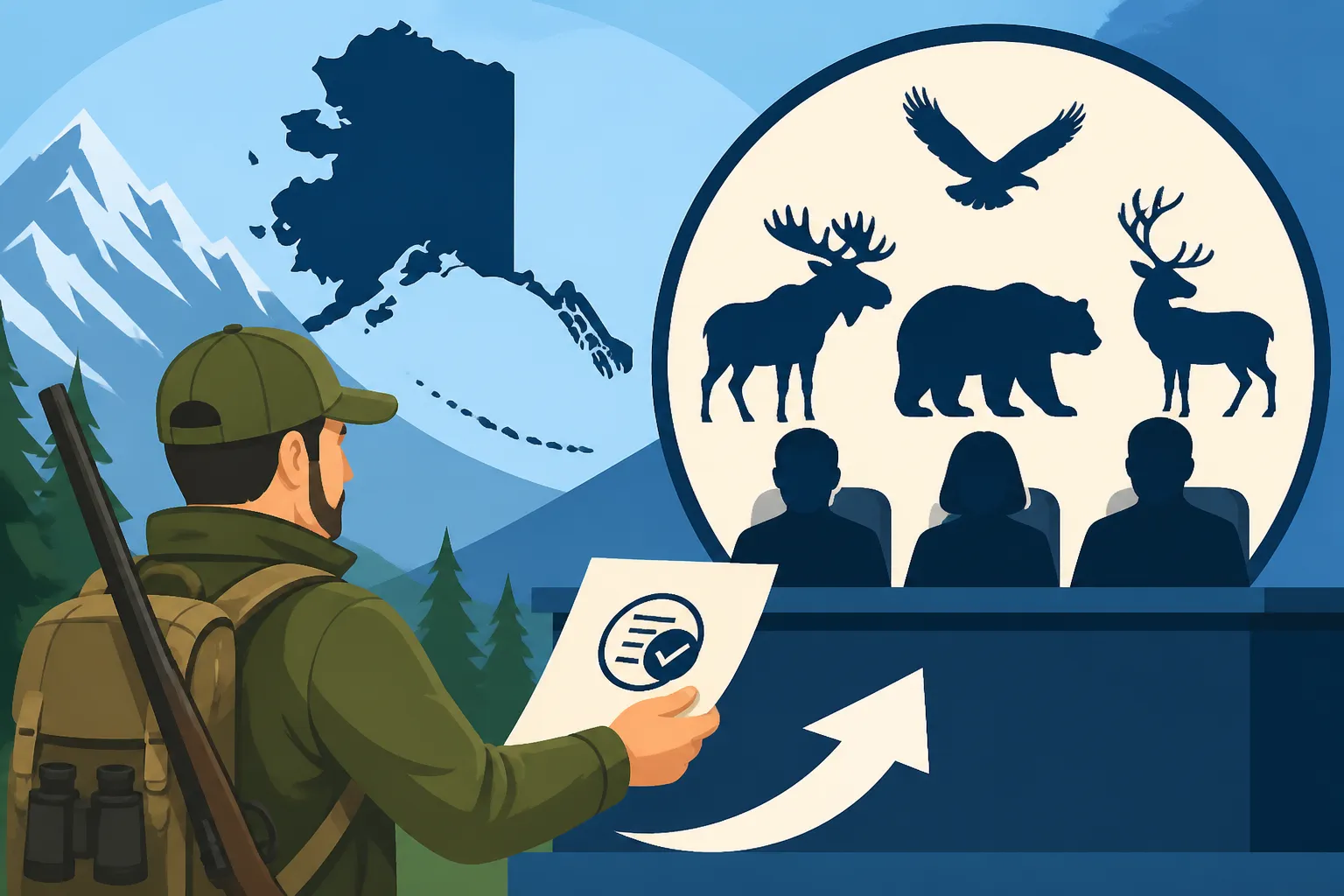
The culmination of your efforts often involves presenting your proposal directly to the Board of Game members at one of their public meetings. This can be intimidating, but it's a critical opportunity to personally advocate for your change. These meetings are usually held in various communities across the state, and often include options for virtual participation. Even if you weren't the one who initially wrote the proposal, you can still show up and lend your voice by providing public testimony.
When you testify, be prepared. Rehearse your key points, focusing on the problem your proposal solves, the benefits it offers, and the data supporting it. Board members appreciate concise, respectful, and fact-based testimony. Avoid getting emotional or making personal attacks. You'll typically have a limited amount of time (often 3-5 minutes), so use it wisely. If you have supporting documents, such as maps or photos, be sure to bring copies for the Board members. Remember that other members of the public will also be testifying, sometimes for or against your proposal. Be ready to listen and respond respectfully, if given the opportunity. This direct engagement allows you to provide nuance and answer questions that might not have been fully addressed in your written submission, truly bringing your field experience to the decision-makers.
What Happens After a Decision
After all testimony and deliberation, the Board will vote on your proposal. There are several possible outcomes:
- Adopted: Congratulations! Your proposal passes and will be incorporated into the next regulatory cycle.
- Adopted as Amended: The Board adopts your proposal, but with some modifications based on testimony, staff comments, or their own deliberation.
- Deferred: The Board might postpone a decision to gather more information, allowing it to be considered at a future meeting.
- Rejected: Your proposal does not pass. This can be disappointing, but it's not the end of the road. The Board typically provides a reason for rejection.
If your proposal is rejected, take it as a learning opportunity. Review the Board's rationale. Was there insufficient data? Did it conflict with biological objectives? Was there strong opposition from other stakeholders? Many successful proposals were initially rejected, refined, and resubmitted in a later cycle. Persistence, coupled with a willingness to learn and adapt, is key. The process might seem slow, but it's designed to be thorough and inclusive, ensuring that changes to Alaska's November 1 to December 15 Draw Application Window or any other critical regulation are made thoughtfully.
Maximizing Your Proposal's Impact: Strategies for Success
Getting a proposal adopted by the Alaska Board of Game is a significant accomplishment. It requires more than just identifying a problem; it demands strategic thinking, a commitment to data, and a willingness to collaborate. While there are no guarantees, these strategies can dramatically increase your chances of success.
Focus on Specificity and Feasibility
One of the most common reasons proposals fail is a lack of specificity or feasibility. Don't propose a vague concept like "we need more deer." Instead, propose something precise: "Extend the Unit 7 Sitka blacktail deer season by five days for antlered bucks only, specifically from November 15-20, to allow for increased hunter opportunity during the late rut while maintaining a conservative harvest." This gives the Board something concrete to evaluate. The ADF&G team needs to be able to implement and enforce any proposed change, so your idea must be practical. Could a local Game Warden realistically enforce it? Does it require resources that don't exist?
Consider the implications for all stakeholders. For example, if you're proposing changes to Federal Subsistence Hunting on Alaska Public Lands, you need to understand the unique legal framework and the priorities of subsistence users. A feasible proposal respects the realities of wildlife management, biology, enforcement capabilities, and the diverse needs of Alaskan communities. It's about finding a practical sweet spot that benefits both the resource and the people who depend on it.
Data-Driven Arguments Over Emotion
While your passion for hunting and wildlife is commendable, emotional appeals alone rarely sway the Board. What moves them are facts, figures, and sound biological reasoning. Your proposal should be a mini-research paper, not a personal grievance. "Numbers speak volumes" to the Board. This is where your research, perhaps leveraging platforms like GoHunt that aggregate harvest data and other metrics, becomes invaluable. For example, if you are suggesting an increase in the bag limit for caribou in a particular unit, you should present recent population survey data, harvest records, and projections that show the herd can sustain a higher take.
Conversely, if you're arguing for a reduction in harvest, present data on declining populations, changes in sex ratios, or increased pressure from other sources. If you're suggesting a change to an antler restriction, provide data or logical arguments about why the current rule is not achieving its intended management goal and how your proposal would improve it. Even qualitative observations from the field become more powerful when presented systematically: "Over the past three seasons, hunters in GMU X have reported a 20% decline in encounters with legal bulls, as documented in hunter success surveys." The more objective data you can weave into your narrative, the stronger your argument will be. Understanding the context of Alaska Harvest Report Deadline After the Hunt can help you realize how data from past seasons directly impacts future proposals.
Seeking Collaboration and Understanding
The Board's decisions often involve balancing competing interests. Hunters, trappers, guides, subsistence users, landowners, and non-consumptive users all have a stake in Alaska's wildlife. A proposal that shows an understanding of these diverse perspectives, and ideally, has garnered support from multiple groups, is far more likely to succeed. Don't operate in a vacuum. Discuss your ideas with different user groups. Try to anticipate their concerns and address them proactively in your proposal.
Working with local hunting clubs or conservation organizations can provide a powerful collective voice. For example, if you're proposing a new permit hunt, engaging with organizations that have experience navigating draw applications and advocating for specific hunting opportunities can lend significant weight. This collaborative approach not only strengthens your proposal but also builds goodwill and understanding within the broader wildlife community. Remember, good wildlife management is a collective effort, and demonstrating your commitment to that principle can make all the difference. Your engagement is a crucial part of the democratic process that governs everything from Alaska Hunting License Validity Period to specific regional regulations.
Key Stages of an Alaska Board of Game Proposal
| Stage | Description | Typical Timeline (Approx.) | Your Primary Action |
|---|---|---|---|
| Problem Identification | Recognizing an issue with current regulations or a need for new ones. | Ongoing, field observations. | Keen observation, discussion with fellow hunters, initial research. |
| Proposal Drafting | Writing the formal submission using the official ADF&G form. | Annual (e.g., March-May) | Thorough research (GoHunt, ADF&G data), consult biologists, precise wording. |
| Submission | Submitting the completed proposal to ADF&G. | Annual Deadline (e.g., May/June) | Ensure all fields are complete, meet the official deadline, confirm receipt. |
| Staff Review & Public Comment | ADF&G staff analyze proposals; public provides written input. | Summer/Fall | Monitor your proposal's status, encourage others to submit supporting comments. |
| Board Meeting Presentation | You present your case directly to the Board of Game members. | Fall/Winter (Specific Cycle Meeting) | Prepare concise testimony, attend meeting (in person or virtual), answer questions. |
| Board Decision | The Board votes on your proposal. | End of Meeting Cycle | Await decision, understand the rationale for adoption, amendment, or rejection. |
| Implementation | If adopted, the new regulation becomes active. | Next Hunting Season Cycle | Review updated regulations, celebrate your contribution to conservation. |
Disclaimer
The information provided in this guide is for general informational purposes only and is not legal advice. Hunting regulations in Alaska are complex and subject to change. Always consult the most current Alaska Department of Fish and Game hunting regulations booklet, emergency orders, and official Board of Game documents before planning any hunting activities or submitting proposals. It is the hunter's responsibility to know and follow all applicable laws and regulations.