Alaska 50-Inch Moose Spread Rule
One of the most nerve-wracking moments for any hunter chasing Alaska moose isn't necessarily the shot itself, but the agonizing seconds before, trying to confirm if that magnificent bull you're staring at is actually legal. The infamous "50-inch spread rule" has caused countless sleepless nights and more than a few frustrated sighs in moose camps across the state. This guide is dedicated to dissecting this crucial regulation, helping you develop the skills and confidence to accurately judge a legal bull in the vast, wild expanse of Alaska.
Understanding Alaska's 50-Inch Moose Spread Rule
Alaska's diverse moose population is managed through a complex system of regulations, and antler restrictions are a cornerstone of many management units. These rules are designed to protect younger bulls and promote a healthy age structure within the herd, ultimately ensuring sustainable hunting opportunities for future generations. The 50-inch spread rule is arguably the most recognized and often misunderstood of these regulations, leading to considerable stress for hunters trying to make a split-second decision in the field.
What the 50-Inch Rule Truly Means
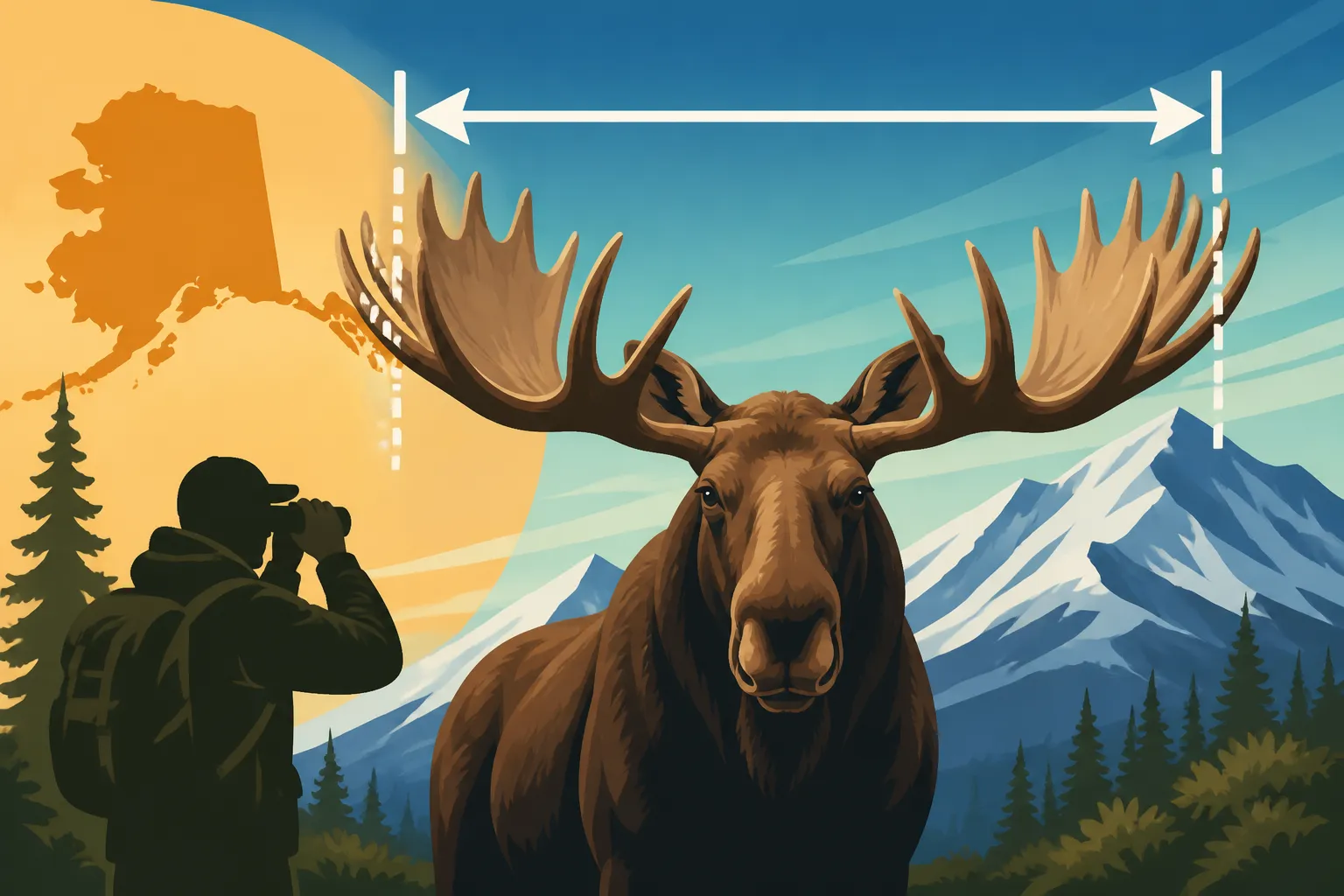
At its heart, the 50-inch moose spread rule dictates that a bull moose is legal to harvest if its antlers measure at least 50 inches from the widest point of one antler to the widest point of the other. It's a clear, quantifiable measurement, but in the field, with adrenaline pumping and limited visibility, that measurement can feel incredibly abstract. This rule is often combined with other antler restrictions, such as the "spike-fork" rule, which targets younger bulls, or rules requiring a certain number of brow tines. For example, some units might require a 50-inch spread OR three brow tines on one side. These complex combinations are why it's absolutely critical to consult the most current Alaska hunting regulations for the specific Game Management Unit (GMU) you plan to hunt. A resource like GoHunt can be invaluable for cross-referencing these regulations and understanding specific unit requirements, as they compile detailed information that is regularly updated. Ignoring these details can quickly turn a dream hunt into a costly citation.
The underlying purpose of the 50-inch rule is rooted in moose biology and population dynamics. By protecting bulls that haven't yet reached a 50-inch spread, managers aim to allow these younger animals to mature, contribute to the breeding population, and grow larger antlers, which also means more meat for successful hunters later on. This selective harvest strategy helps maintain a robust bull-to-cow ratio, ensuring reproductive success, and also allows for a greater proportion of older, larger-antlered bulls in the population, which many hunters find more desirable. However, it also places a significant burden on hunters to become proficient at field judging, as misidentification can lead to serious legal consequences and the waste of an animal.
The Consequences of Misjudging a Legal Bull
Mistaking a sublegal bull for a legal one is a serious offense in Alaska, carrying stiff penalties that can include significant fines, confiscation of the animal and gear, loss of hunting privileges, and even jail time. Beyond the legal ramifications, there's the ethical consideration of taking an animal that isn't legal. No hunter wants to waste an animal, and the thought of mistakenly harvesting a moose that doesn't meet the requirements is a heavy burden. This is why thorough preparation and practice in field judging are not just recommended, but essential for anyone considering a moose hunt in Alaska. The stakes are high, and the vastness of the Alaskan wilderness means there's rarely a second opinion readily available when you're making that critical decision.
Many hunters will tell you tales of seeing a "borderline" bull and choosing to pass rather than risk a violation. This conservative approach, while sometimes leading to missed opportunities, ensures compliance and protects the hunter from legal trouble. It also reinforces the idea that if there's any doubt, it's usually best to let the bull walk. The pressure to make the right call is immense, especially after days of hard hunting without seeing another moose. This is precisely why developing reliable field judging techniques is paramount.
Field Judging Techniques for the 50-Inch Spread
Accurately judging a 50-inch moose spread in the field is a skill that takes practice, but there are several reliable techniques and visual cues you can learn to increase your confidence. It's rarely an exact science, but by combining multiple assessment methods, you can significantly improve your chances of making the correct call. Remember, every bull is different, and what works perfectly for one might be less clear for another.
Using Your Rifle as a Reference
One of the most common and effective methods for field judging a moose's antler spread is to use your rifle as a measuring stick. This technique works because most hunting rifles, especially those commonly used for moose, are roughly 40-45 inches long. If you can reliably estimate your rifle's length, you can use it to gauge the antlers. The general rule of thumb is this: if the tips of the antlers extend noticeably past the muzzle and buttstock of your rifle when held horizontally against the bull, it's likely a 50-inch or wider bull. However, this method requires a steady hand, a clear line of sight, and an understanding of perspective.
To practice this, measure your own rifle and memorize its exact length. Then, when you're looking at a bull, bring your rifle to your shoulder, aiming just under the antlers. Mentally or physically, "project" the length of your rifle onto the antlers. If the antlers appear to extend well beyond that projected length, you're probably looking at a legal bull. The trick is to do this without actually aiming at the animal, focusing solely on the visual comparison. Distance can play tricks, though; a closer bull will make your rifle appear shorter relative to its antlers, while a distant bull can make it seem longer. This technique is best used as one of several checks, especially for bulls at reasonable shooting distances where you can get a clear, unobstructed view.
Body Landmarks and Proportions
Moose are massive animals, and their body proportions can offer excellent visual cues for judging antler spread. A mature bull's body is typically around 5 feet wide at the shoulder, and its ears are generally about 2 feet apart at their widest point. While these are averages, they provide a consistent reference. A bull with a 50-inch spread will have antlers that extend significantly wider than its body at the shoulders, and certainly much wider than its ears.
Consider the following benchmarks:
- Ear-to-ear spread: If the antlers don't extend at least twice the width of the bull's ears, it's almost certainly not a 50-inch bull.
- Shoulder width: A truly legal bull's antlers should extend well past its shoulder points. Imagine a vertical line dropping from the widest part of each antler; if these lines fall noticeably outside the bull's shoulders, you're on the right track. This method works well when the bull is standing broadside, giving you a good profile. For instance, if you're glassing the Alaska Range, these visual benchmarks become critical when trying to discern legal antlers from far away. It takes practice to develop this eye, but comparing antler width to known body dimensions is a highly reliable technique.
| Antler Spread Category | Visual Cues (Relative to Body) | Decision |
|---|---|---|
| Sub-50 Inch | Much narrower than shoulders; barely wider than ears. | Pass |
| Borderline (40-48") | Extends slightly past shoulders; appears about 1.5x ear width. | Exercise caution, seek better view. |
| 50+ Inch | Extends significantly past shoulders; often 2x+ ear width. | Likely legal. |
Head-On Versus Profile Views
The angle at which you view a moose can dramatically impact your ability to judge its antler spread. A bull viewed head-on might look massive, but the depth perception makes it incredibly difficult to accurately gauge horizontal spread. From this angle, the antlers can appear wider or narrower than they actually are. It's easy to be fooled by perspective, especially if the bull is looking slightly towards or away from you.
The ideal viewing angle for judging spread is a broadside or slightly quartering-away profile. This allows you to see the true horizontal expanse of the antlers against the backdrop of the animal's body and the surrounding environment. If a bull is standing head-on, patience is key. Try to maneuver, if possible and safe, to get a better side angle. If the bull is moving, try to pick out a moment when its head turns, giving you a brief but crucial broadside view. Sometimes, you just have to wait for the animal to cooperate, which can be agonizing when you're eager to make a call. However, rushing a judgment from a poor angle is a recipe for error.
Factors That Influence Field Judging Accuracy
Even with solid techniques, a number of external factors can conspire against you, making field judging significantly harder. Understanding these variables and how they trick your eyes is just as important as knowing the rules themselves. Being aware of these challenges will help you make more conservative and accurate decisions when faced with a potentially legal bull.
Distance, Lighting, and Terrain
The sheer distance between you and the moose is perhaps the biggest impediment to accurate field judging. What looks like a 50-inch bull at 200 yards might shrink considerably when it gets to 100 yards, or conversely, a "small" bull might suddenly appear legal when you close the gap. Optical illusions are rampant when viewing animals at long range, especially through optics. Quality binoculars and a spotting scope can help, but they don't eliminate the challenge.
Lighting conditions also play a huge role. Early morning or late evening light can create harsh shadows or halo effects around antlers, making them appear larger or obscuring their true size. A bull standing in dense willows, partially obscured, is much harder to judge than one standing on open tundra. Haze, fog, or rain can further degrade visibility, turning a clear assessment into a frustrating guessing game. This is where patience really pays off; sometimes, waiting for the light to improve or the animal to move into a better position is the only way to get a confident read. When scouting a unit from satellite imagery before you fly, try to anticipate where you might encounter moose in varied terrain and consider how that might affect your ability to judge antlers.
Antler Configuration and Variations
Not all 50-inch bulls look alike. Moose antlers grow in incredibly diverse patterns, and this variation can make field judging particularly tricky. Some bulls have very wide, flat paddles, while others might have long, narrow main beams with many points, and still reach the 50-inch mark. A bull with long points extending outward might appear wider than a bull with compact, heavy paddles of the same actual spread. The number of brow tines on Alaska antler-restricted bulls also matters in some units.
For instance, a bull might have a lot of mass but not necessarily the spread, or vice versa. Sometimes, a bull with a broken point on one side can throw off your judgment, making it seem shorter than its healthy counterpart. Always focus on the widest point overall, not just the tip of the longest point. This is where understanding the average antler growth patterns for moose in your hunting area, perhaps through resources like GoHunt, can provide an edge. Different regions of Alaska produce different antler characteristics. For example, interior Alaska-Yukon moose generally have larger, wider antlers than those in some coastal areas.
Common Mistakes and Optical Illusions
Hunters, especially those new to moose hunting, frequently fall victim to common optical illusions. One major culprit is the "bigger than it is" illusion when a moose is standing alone in open country. Without anything to compare it to, a moose can appear much larger than reality. Conversely, a large bull standing next to small trees or brush might appear smaller due to the surrounding context. Another common mistake is failing to account for head tilt. If a bull's head is tilted even slightly, its antlers can look wider or narrower depending on the angle, giving a false impression of its true spread.
Adrenaline can also warp perception. The excitement of seeing a bull can make you want it to be legal, subtly influencing your judgment. It's crucial to take a deep breath, use your optics, and apply your learned judging techniques systematically before making a decision. Don't let excitement rush you into a mistake. Remember that mistakes can lead to citations as discussed in why antler restriction hunts end in citations. Always double-check your judgment and, if in doubt, err on the side of caution.
Regulatory Nuances and Resources
Navigating Alaska's hunting regulations can feel like deciphering ancient texts, but understanding where to find accurate information and how to interpret it is non-negotiable for a successful and legal hunt. The rules for moose are particularly detailed, often varying significantly from one Game Management Unit (GMU) to another, and even changing year to year.
Where to Find Current Regulations
The Alaska Department of Fish and Game (ADF&G) is your ultimate, official source for all hunting regulations. Their website provides comprehensive, up-to-date regulations, often available months before the hunting season opens. It’s critical to download and thoroughly read the specific regulations booklet for the year you plan to hunt, paying close attention to the General Hunting Regulations and the regulations specific to your chosen Game Management Unit (GMU). These documents detail all antler restrictions, season dates, bag limits, and reporting requirements. Don't rely on outdated information or hearsay from forums.
Beyond the official ADF&G website, resources like GoHunt can be incredibly helpful for consolidating and interpreting regulation information. They often provide tools and summaries that make it easier to compare rules across different units or understand the implications of specific antler restrictions. However, always use these as supplementary tools and cross-reference with the official ADF&G regulations before making any final plans. An informed hunter is a legal hunter, and taking the time to thoroughly understand the rules for your specific hunt is the single most important step you can take.
The Role of Harvest Tickets and Reporting
In many Alaska moose hunts, you'll be required to obtain a harvest ticket or a registration permit. These documents are vital, not just for legal hunting, but also for post-harvest reporting. A harvest ticket typically needs to be validated and attached to the moose immediately after the kill, and then reported to ADF&G within a specified timeframe. These reports are crucial for wildlife managers to track harvest numbers, assess population health, and make future management decisions.
Failing to report your harvest is a violation, even if you took a legal animal. The regulations booklet will clearly outline the specific reporting requirements for your hunt area. For instance, in registration hunts that close on quota, timely reporting is paramount, as the season can close early if the quota is met. Always be prepared with the necessary documentation and know your reporting obligations before you even step foot in the field. Understanding these requirements is as much a part of the hunt as field judging a legal bull under Alaska antler rules.
Importance of Hunter Education
For anyone new to hunting in Alaska, or even experienced hunters from other states, completing a certified hunter education course is often a prerequisite, especially for younger hunters. This education provides a foundational understanding of hunting safety, ethics, and regulations. While not specifically focused on the nuances of the 50-inch rule, these courses instill the discipline and responsible hunting practices that are essential for successful and legal hunts.
Furthermore, Alaska offers specific hunter orientation courses for certain species, like Dall sheep. While there isn't a dedicated moose antler judging course, the principles of responsible harvest, ethical shot placement, and understanding game management are heavily emphasized. Continuous learning, whether through formal education or self-study, is key to becoming a confident and compliant Alaska hunter. Never stop honing your skills, both with your rifle and with your regulations booklet. Even seasoned hunters can benefit from reviewing the regulations annually, as rules can change.
Disclaimer
This article is for general informational purposes only and does not constitute professional advice. Laws, prices and regulations vary by location and change over time. Consult a qualified professional for guidance on your specific situation.