Alaska Draw Application Deadline Time Zone
It’s December, the holidays are just around the corner, and you’re probably juggling a thousand things, but for many of us, there’s one critical date looming: the Alaska big game draw application deadline. The frustration of trying to figure out exact closing times, especially when you’re not living in Alaska, can be a major headache, leaving you anxious about missing out on a dream hunt. This guide is here to clear up all the confusion about the Alaska Draw application deadline time zone, ensuring your hard work and planning don't go to waste.
The Critical Importance of Time Zones for Alaska Draw Applicants
Understanding time zones might seem like a minor detail, but when it comes to the Alaska big game draw, it’s absolutely paramount. A simple miscalculation can mean the difference between having your application considered for that coveted bull moose or Dall sheep permit and having it rejected because you were just a few minutes too late. This isn't just about being punctual; it's about navigating a system designed around a specific geographic reality that many applicants aren't physically present for.
Alaska's Unique Geographic Sprawl and Time Zones
Alaska, being an enormous state, actually spans multiple time zones, though for most of the year and certainly for the critical December 15th deadline, the vast majority of the state, including Anchorage and Fairbanks, observes Alaska Standard Time (AKST), which is UTC-9. While a small portion of the Aleutian Islands and St. Lawrence Island operates on Hawaii-Aleutian Standard Time, the Alaska Department of Fish and Game (ADF&G) consistently uses AKST for its statewide official deadlines. This is crucial because if you're in, say, New York or even California, your local clock will be ticking much faster towards that deadline than the clock in Anchorage. Hunters often overlook this difference, assuming a national deadline is based on Eastern Standard Time or Pacific, but Alaska plays by its own rules, and understanding this is the first step in successful planning. It's not just a matter of "when" but "where" that time is measured.
The Official Deadline: When the Clock Truly Stops
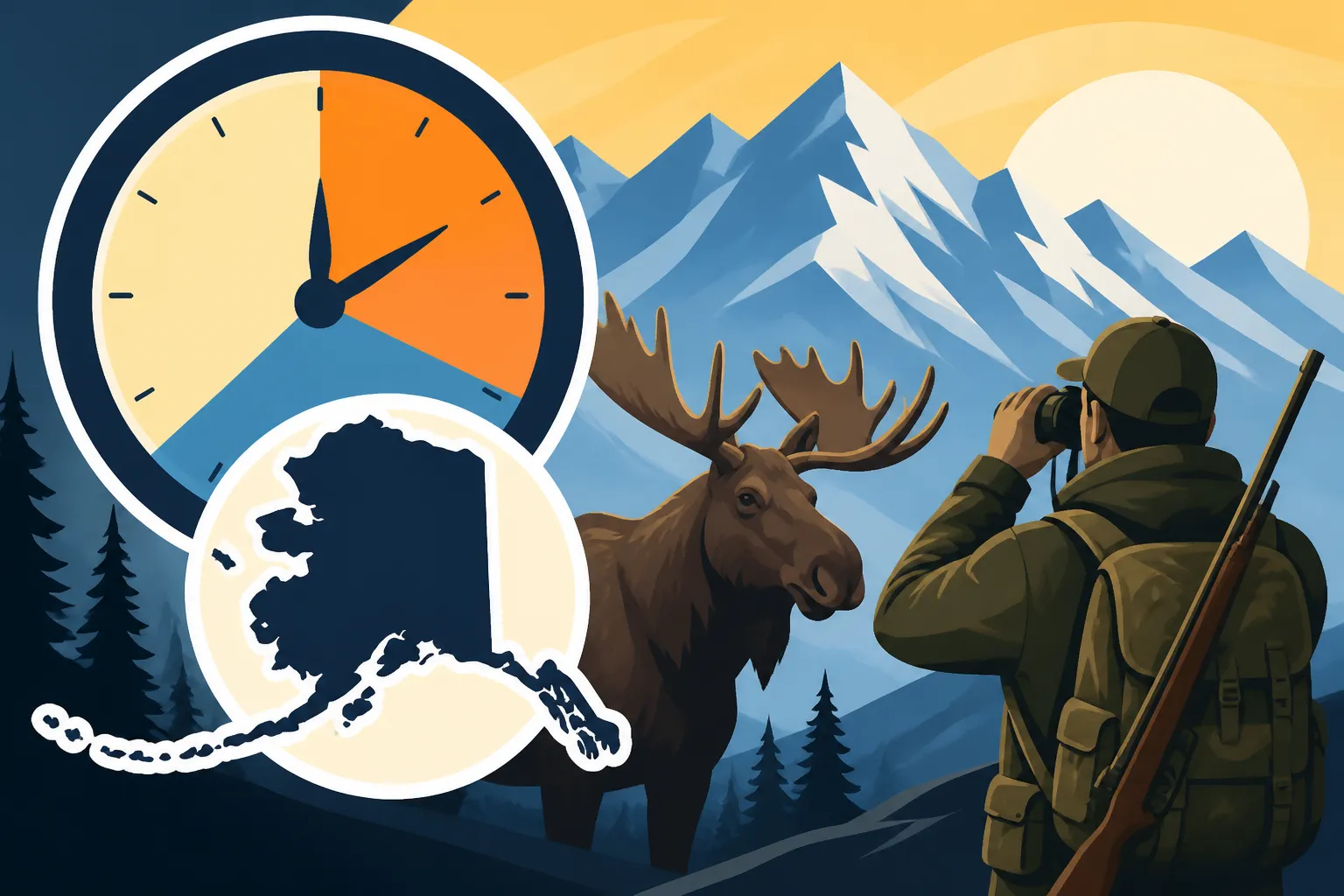
The official deadline for the Alaska big game drawing permits is notoriously December 15th. But here’s the kicker: it’s not just December 15th at midnight. The deadline is precisely 5:00 PM Alaska Standard Time (AKST) on December 15th. This means that if you're on the East Coast (EST), that 5:00 PM AKST deadline translates to 9:00 PM EST. If you're in the Central Time Zone (CST), it's 8:00 PM CST. For those on the Pacific Coast (PST), it's 6:00 PM PST. This critical four-hour, three-hour, or one-hour difference can catch many hunters off guard, especially if they wait until the evening of the 15th to submit. Imagine sitting down at 8:00 PM Pacific Time, thinking you have four more hours, only to find the portal closed an hour ago! It’s a gut punch no one wants to experience. Tools like GoHunt often include countdown timers adjusted for your local time zone, which can be incredibly helpful for keeping these critical distinctions straight and ensuring you don't miss the cutoff.
Navigating the Application Window: Don't Wait Until the Last Minute
The application window for the Alaska big game draw opens on November 1st and closes on December 15th. While this gives you a full six weeks to apply, the savvy hunter knows that procrastinating until the final hours of December 15th is a recipe for disaster. There are too many variables at play, from internet connectivity issues to unexpected life events, that can derail an otherwise perfectly planned application. Think of it like packing for a hunt; you wouldn’t wait until the plane is boarding to start stuffing your backpack, would you? The same principle applies here.
The November 1 to December 15 Window
The six-week period from November 1st to December 15th is your opportunity to thoroughly research your hunt choices, consult maps, review regulations, and meticulously fill out your application. This is ample time to make informed decisions about your preferred species and hunt numbers. For many hunters, the excitement builds in those weeks as they consider options like applying for specific Dall sheep units in the Brooks Range or a highly sought-after moose permit in the Nelchina Basin. This period is also perfect for reviewing all the intricate details of each hunt, such as the specific antler restrictions for moose or the full-curl requirements for rams. If you're going for a species like moose, remember that Alaska allows six moose hunt choices, which gives you plenty of room to strategize. Submitting your application well before the final deadline alleviates the pressure of that critical final day and gives you peace of mind that your entry is in the system.
The Real-World Impact of Time Zone Differences
Let's put this into a practical context. Imagine you’re a dedicated hunter living in Florida, three time zones ahead of Alaska. If the deadline is 5:00 PM AKST on December 15th, that means for you, the portal slams shut at 9:00 PM Eastern Standard Time. You might finish dinner, settle down with your computer around 8:30 PM EST, and only then realize you have a mere 30 minutes to finalize and submit your application. This can lead to rushed decisions, errors, or worse, a completely missed deadline. For someone in California, it's a slightly less frantic 6:00 PM PST deadline, but still, an hour after what many might consider "end of business day."
Consider this table for clarity on how the 5:00 PM AKST deadline translates across other major North American time zones:
| Alaska Standard Time (AKST) | Pacific Standard Time (PST) | Mountain Standard Time (MST) | Central Standard Time (CST) | Eastern Standard Time (EST) |
|---|---|---|---|---|
| December 15, 5:00 PM | December 15, 6:00 PM | December 15, 7:00 PM | December 15, 8:00 PM | December 15, 9:00 PM |
As you can see, the later you are located in the contiguous United States, the earlier your local clock will strike the application closing time. This often leads to a false sense of security for East Coast hunters who think they have until midnight. Setting a reminder for a "soft" deadline in your own time zone, perhaps a day or two before the official December 15th, 5 PM AKST, is a wise move to prevent this kind of calendar shock. Many seasoned hunters rely on specialized platforms, with GoHunt being a prime example, for localized deadline reminders that automatically adjust for their specific time zone, removing much of the guesswork.
Avoiding Common Mistakes and Ensuring a Successful Submission
Even if you’ve meticulously planned around the time zone, there are other common pitfalls that can trip up an otherwise perfect application. The last thing you want is for your application to be invalidated, not because you missed the deadline, but because of a technical hiccup or a simple oversight. The Alaskan hunting system, while robust, still relies on human input, and human error is always a factor.
Technical Glitches and Internet Connectivity
The digital age has made applying for hunts incredibly convenient, but it also introduces a new set of challenges. On deadline day, especially in the final hours, the Alaska Department of Fish and Game (ADF&G) servers can experience heavy traffic. This surge can lead to slow loading times, submission errors, or even temporary outages. Imagine being in a remote cabin, relying on a finicky satellite internet connection, trying to upload your application just minutes before the deadline – it’s a scenario ripe for frustration. It’s far better to complete your application several days in advance when server traffic is minimal and your internet connection is less likely to be overwhelmed. Planning ahead even helps with things like making sure you've Downloaded Offline Maps Before a Fly-In if you’re using remote resources to finalize your choices, or having a reliable communication plan in place like Signal Devices and Check-In Plans for Solo Alaska Hunts. Submitting early essentially acts as an insurance policy against these unpredictable technical issues.
Double-Checking Your Application Details
Meeting the deadline is only half the battle; the other half is submitting an accurate and complete application. It's shockingly easy to make a small mistake that could invalidate your entry or, at the very least, put you in the wrong hunt area. Did you correctly enter your hunt numbers? Did you select the correct species and weapon type? Are your personal details, including your license number, correct? For example, understanding the nuances of Alaska Draw Application Fees Per Hunt Number, or making sure you haven't made a mistake that could lead to Why Antler Restriction Hunts End in Citations, are crucial.
It's highly recommended to print a draft of your application or review it multiple times before hitting that final submit button. Get a second pair of eyes to look it over if possible. A friend or hunting partner might catch a typo or a mis-selected option that you’ve overlooked. Don't let the stress of the deadline overshadow the importance of accuracy.
Strategies for a Stress-Free Application Experience
Applying for an Alaska big game draw permit doesn't have to be a last-minute scramble filled with anxiety. With a few proactive strategies, you can ensure a smooth process and confidently submit your application well ahead of the crucial December 15th deadline. It's all about planning, leveraging available resources, and giving yourself ample breathing room.
Proactive Planning and Scheduling Reminders
The simplest and most effective strategy is to start early and set multiple reminders. As soon as the application period opens on November 1st, make it a priority to begin your research and decision-making. Don't wait until December to even look at the options. Set a "personal deadline" for yourself a full week before the official December 15th date – say, December 8th or 9th. This buffer gives you several days to iron out any unforeseen issues, technical or otherwise, without the crushing pressure of the official deadline looming. Utilize calendar alerts on your phone, computer, and even a physical planner. Many hunters find it helpful to integrate their application schedule with other planning aspects, like looking into Alaska Hunting Seasons and Tag Rules Explained, or confirming Alaska's November 1 to December 15 Draw Application Window, which helps embed the deadline into their overall hunting calendar.
Consider setting reminders that account for the time zone difference. For instance, if you're in New York, your primary reminder could be for December 15th at 7:00 PM EST, clearly noting that this is two hours before the actual 9:00 PM EST deadline equivalent. Platforms like GoHunt are fantastic for this, as they often send out timely reminders and can even display deadlines converted to your local time zone, taking away a significant portion of the mental load.
Confirmation and Verification After Submission
Once you hit "submit," your work isn't quite done. The final, critical step is to confirm that your application was successfully received by ADF&G. Most online application systems will provide an immediate confirmation screen or send an email receipt. Save this confirmation! Screenshot the confirmation page, print the email, or both. This documentation is your proof that you applied successfully, should any questions arise later. Without this proof, it can be nearly impossible to verify your application status, especially if there's a system glitch on their end.
Make it a habit to check your spam or junk folder if you don't see an email confirmation right away. If, after a reasonable amount of time, you haven't received any confirmation, contact ADF&G during business hours before the deadline passes. Don't wait until February to discover there was an issue when the Alaska Draw Results Release in February. While you can generally verify your status later when you are Checking Alaska Draw Results Online, the peace of mind knowing your application is definitively in the system is invaluable. This final verification step ensures that all your effort in navigating deadlines and preparing your application truly counts towards your chance at an Alaska hunt.
Disclaimer
Please note that hunting regulations and application procedures can change. Always consult the official Alaska Department of Fish and Game (ADF&G) website or current hunting regulations booklet for the most up-to-date and accurate information before applying for any permits or planning your hunt. This article is for informational purposes only and should not replace official sources.