Alaska Moose Antler Restriction Areas
The majestic Alaska-Yukon moose, with its incredible size and sprawling antlers, is a dream for many hunters. But hitting the field, particularly in some of Alaska's most accessible or pressured areas, can quickly turn that dream into a stressful guessing game. Nothing is more frustrating than spotting a magnificent bull, only to wrestle with doubt about whether it meets the complex antler restrictions, fearing a costly citation for a mistake. This guide is here to unravel the complexities of Alaska moose antler restriction areas, helping you understand the rules, how to judge a legal bull, and ultimately, hunt confidently and responsibly.
Why Alaska Has Antler Restriction Areas for Moose
It might seem counterintuitive to put more rules on hunters, especially when you're just trying to fill your freezer, but Alaska’s antler restriction areas for moose aren't designed to make your life harder. They are a critical tool used by the Alaska Department of Fish and Game (ADF&G) for sound wildlife management.
The primary goal of these regulations is to maintain a healthy and productive moose population, ensuring good bull-to-cow ratios and strong calf recruitment. In some areas, particularly those with higher hunting pressure or easier road access, hunters might disproportionately harvest the largest, most dominant bulls. This can lead to a skewed age structure within the bull population, potentially reducing breeding success and overall herd health. Think of it like a forest: if you only ever cut down the biggest, oldest trees, the younger ones might not get a chance to mature and reproduce effectively. Antler restrictions help protect a segment of the bull population, allowing younger bulls to reach their prime and contribute to the gene pool before they become legal targets. This strategy helps ensure there are enough mature bulls to breed effectively with the cows, leading to more calves and, in turn, more moose for future generations of hunters. It’s all about sustainability.
Decoding the Common Types of Moose Antler Restrictions
Alaska employs a few key types of antler restrictions, each designed to achieve specific management goals. Understanding the nuances of each is crucial for any hunter.
Spike-Fork Bulls
One of the most common and often misunderstood restrictions revolves around "spike-fork" antlered bulls. A spike-fork bull is generally defined as a bull moose with at least one antler that has no more than one point (a "spike") or with one or more antlers that have a single main beam with a single, unbranched point (a "fork"). Essentially, these are young bulls whose antlers are not yet well-developed. The intent behind this restriction is usually to protect younger, developing bulls, giving them a chance to grow into larger, more mature animals before they can be harvested.
The challenge for hunters often comes in the field. What looks like a spike or a fork from a distance, or through dense brush, might actually have a small brow tump or an extra point tucked away. You need to be absolutely certain of the antler configuration before you pull the trigger. Mistaking a legally "restricted" bull for an unrestricted one is a common pitfall and can lead to serious consequences. Make sure you fully understand the definition of a legal spike-fork bull in your specific Game Management Unit (GMU) before heading out.
The 50-Inch Spread Rule
Perhaps the most iconic—and anxiety-inducing—antler restriction in Alaska is the "50-inch spread" rule. This regulation dictates that a bull moose must have antlers with a spread of at least 50 inches to be legally harvested. This rule primarily targets mature bulls, allowing younger bulls with smaller spreads to pass and continue to grow. It’s a very effective way to ensure that prime breeding bulls are protected for several years, contributing to the herd's genetic diversity and overall health.
Estimating a 50-inch spread in the field is a skill that takes practice. Your rifle, if it's a typical hunting rifle, might be around 40-45 inches long. So, a 50-inch bull's antlers would extend noticeably beyond the length of your rifle held horizontally below its rack. Another common reference is the width of a standard ATV or snowmachine handlebars, which are often around 40-45 inches. A full-sized pick-up truck bed is usually 60 inches wide, giving you a top-end reference. It's tough, especially with a moving animal, at long distances, or in varying light conditions. Many hunters have stories of holding their breath, trying to gauge that critical measurement. When in doubt, it’s always best to err on the side of caution.
Brow Tine Minimums
Some areas implement antler restrictions based on the number of brow tines. For example, a regulation might state that a bull must have at least three or four brow tines on one side. Brow tines are the forward-pointing tines on the main beam, typically near the skull. These rules are also designed to protect younger bulls, as brow tines often develop more fully as a moose ages.
The difficulty here mirrors that of judging spike-forks: visibility. Brow tines can be small, obscured by other antler growth, or difficult to count accurately at a distance or through vegetation. You might see a seemingly large bull, but if you can't clearly count the required number of brow tines on at least one side, it might not be a legal animal in that specific unit. This is where patience and quality optics really shine. Often, you'll need to watch a bull for an extended period, waiting for it to turn its head or step into a clearer opening, just to confirm those crucial brow tines.
Here's a quick overview of these common restrictions:
| Restriction Type | Identification | Management Goal | Common Challenge |
|---|---|---|---|
| Spike-Fork | Antler(s) with no more than one point, or one main beam with a single unbranched point. | Protect young, developing bulls. | Distinguishing small brow tines or hidden points at distance. |
| 50-Inch Spread | Antlers measure at least 50 inches across at their widest point. | Protect prime breeding bulls, promote larger racks. | Accurately estimating width in the field without a direct measuring tool. |
| Brow Tine Minimums | Specific number of brow tines (e.g., 3-4) required on at least one antler. | Protect younger bulls, promote mature antler growth. | Counting small or obscured brow tines from afar or in dense cover. |
Where Antler Restrictions Shape Moose Hunting in Alaska
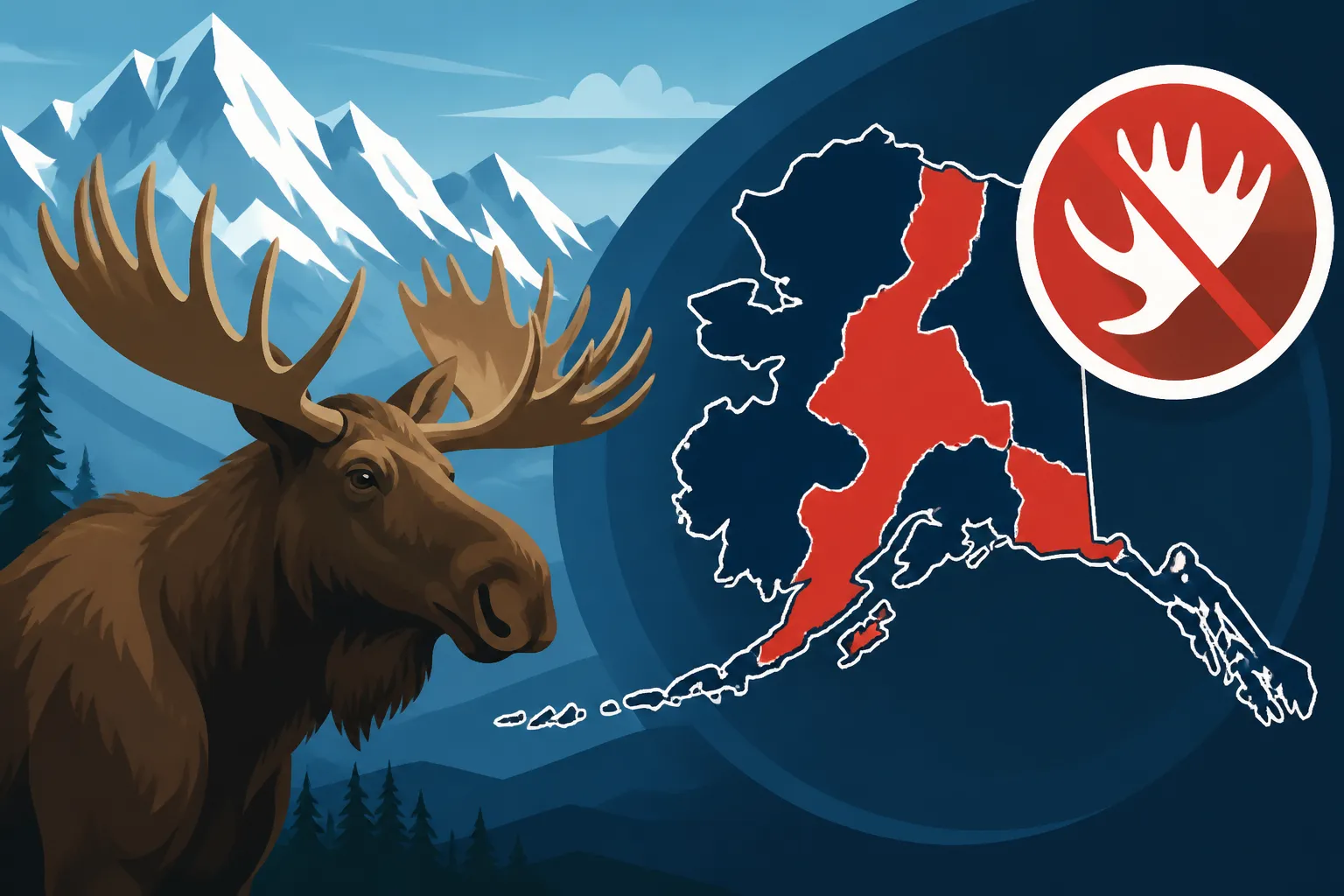
Antler restrictions aren't universal across Alaska; they are strategically applied in specific Game Management Units (GMUs) where they are most needed to achieve management objectives. Knowing which areas have these rules is your first step.
The Kenai Peninsula's Strict Regulations
The Kenai Peninsula, particularly GMU 15, is one of Alaska's most popular and heavily hunted regions, largely due to its road access and proximity to Anchorage. Consequently, it's also famous for some of the state's most stringent moose antler restrictions. For many years, hunters here have faced a "spike-fork or 50-inch spread or 3 brow tines on one side" rule. This means a bull is legal only if it’s either a very young "spike-fork" bull, or a mature bull that meets either the 50-inch spread requirement or has at least three brow tines on one antler.
This combination rule is designed to protect the majority of sub-adult bulls (the "middle class" of moose) while allowing for the harvest of young, small-antlered bulls that might otherwise be overlooked, and mature bulls that have already contributed to the herd. Hunting the Kenai requires meticulous field judging and an iron will to pass on many bulls that might look impressive but don't quite meet the legal criteria. It's a true test of patience and discipline, but it ensures that the Kenai continues to produce healthy moose populations year after year. For the latest on these specific rules, always consult the current ADF&G regulations, which are often available through resources like GoHunt.
Navigating Interior Alaska's Varied Rules
Moving into Interior Alaska, regulations can become more varied. While some areas might have antler restrictions, others are managed under "any bull" rules, meaning any antlered bull moose is fair game. For example, parts of the vast Unit 13 in the Nelchina Basin, famous for its moose and caribou, might have specific restrictions, while other, more remote GMUs in the Interior or Northern Alaska might operate under more liberal "any bull" guidelines due to lower hunting pressure and different population dynamics.
Take parts of GMU 20A near Fairbanks, a well-known area for moose hunting. Depending on the specific hunt area and season, you might find antler restrictions in place to manage local populations. However, venture further into truly remote areas of the state, especially those requiring significant effort to access, and you're more likely to find "any bull" regulations. This flexibility allows wildlife managers to tailor rules to local conditions, ensuring sustainable harvest where populations are robust and protecting them where they need a boost. Understanding the precise boundaries and regulations for each specific GMU you plan to hunt is absolutely critical. Services that provide detailed unit maps and regulation breakdowns, like those found on GoHunt's platform, can be invaluable for your planning. Remember to check the regulations for the specific area and hunt number you draw or register for, as even within a single GMU, rules can differ. You can learn more about Alaska's Game Management Units and How They Are Numbered to better understand these designations.
Mastering Field Judging to Stay Legal
The biggest hurdle for hunters in antler restriction areas is confidence in field judging. A split second decision can mean the difference between a legal harvest and a costly mistake.
Effective Techniques for Estimating Antler Size
When a bull steps out, your adrenaline will surge. This is when cool, calm judgment is paramount. Start by using known measurements as reference points. As mentioned earlier, your rifle is a great baseline. If you know your rifle is, say, 42 inches long, mentally overlay that length across the bull's antlers. If the antlers clearly extend beyond that by a significant margin, you’re likely in the 50-inch range. If they only barely exceed it, or don't at all, it's probably not a 50-inch bull. For brow tines, use your binoculars or spotting scope, and critically, wait for the bull to turn its head. Don't rush a shot based on a fleeting glimpse. Patience here is not just a virtue, it's a legal requirement.
Consider the animal's body size. Larger, older bulls generally have larger antlers, but this isn't a hard and fast rule. A young, healthy bull might develop a respectable spread quickly, while an older bull past its prime might have a regressing rack. When judging a spike-fork, look for any evidence of additional points, even small bumps or buttons that signify branching. What might look like a single point could be a main beam with a small, unbranched point that makes it a "fork." To really nail down the definition, refer to Spike-Fork Legal Definition in Alaska before your hunt. It’s better to watch a bull walk away than to deal with the aftermath of an illegal harvest.
Leveraging Technology and Due Diligence
In today's hunting world, technology can be a huge asset in preparation. Before you even set foot in the bush, utilize mapping tools and resources to familiarize yourself with the terrain and the specific regulations for your chosen GMU. Platforms like GoHunt provide excellent tools for researching hunt units, viewing detailed maps with land ownership overlays, and staying current on regulations. Knowing your unit, understanding the terrain where moose might be found, and having a solid grasp of the rules before you go can significantly reduce the pressure and confusion in the field.
Print out the relevant pages from the ADF&G regulations booklet, highlight the specific rules for your hunt, and carry them with you. Many hunters even laminate a small card with the specific antler restrictions for their unit to keep handy. Discuss the rules with your hunting partners, practice field judging using photos or videos of moose, and establish clear communication signals for when you do encounter a bull. Being proactive and prepared is your best defense against making an illegal harvest. Understanding the precise rules for Brow Tine Counts on Alaska Antler-Restricted Bulls is another key piece of pre-hunt homework.
Consequences of an Illegal Harvest
The stakes are high. Making an illegal harvest in an antler restriction area carries significant penalties. You could face hefty fines, lose the harvested animal, have your hunting license revoked, and even face criminal charges depending on the severity of the violation. Beyond the legal repercussions, there's the ethical burden of wasting an animal and potentially impacting the very resource you cherish.
ADF&G takes these regulations seriously because they are vital for managing Alaska's incredible moose populations. When a hunter violates these rules, it undermines the collective effort to sustain these animals for everyone. It's a stark reminder that hunting is a privilege, not a right, and with that privilege comes a profound responsibility to know and follow the rules. It's truly heartbreaking to hear stories of hunters making honest mistakes that result in citations; a deep understanding of Why Antler Restriction Hunts End in Citations can help you avoid becoming one of them. Take your time, be certain, and if there's any doubt, let that bull walk. There will always be another opportunity, and maintaining your integrity as a hunter is far more valuable than any rack.
Final Thoughts on Hunting Antler-Restricted Moose
Hunting moose in Alaska, especially in antler restriction areas, is an exercise in patience, knowledge, and ethical decision-making. It's not just about pulling the trigger; it's about making informed choices that contribute to the long-term health of the herd. Whether you're chasing the massive bulls found in areas like those discussed in Alaska Moose: Where the Biggest Bulls Live or navigating the complexities of a heavily managed unit, your understanding of these rules is paramount. Remember to always consult the current Alaska hunting regulations for the specific GMU and season you plan to hunt, as rules can change. Resources like GoHunt can help you stay current, and a call to your local ADF&G office is always a good idea if you have specific questions. By doing your homework and applying careful field judgment, you can enjoy a rewarding and legal hunt for one of North America's most magnificent big game animals.
Disclaimer
The information provided in this guide is for general educational purposes only and is not a substitute for the official Alaska Department of Fish and Game hunting regulations. Hunters are responsible for knowing and adhering to all current regulations for their specific hunting unit and season. Always refer to the most recent ADF&G hunting regulations before planning or undertaking any hunt.