Game Bags That Breathe in Coastal Rain
Hunting in coastal Alaska is an incredible experience, but the constant moisture in the air and the frequent rain can turn what should be prime meat into a spoiled disaster if you're not prepared. There's nothing more frustrating than putting in the hard work to harvest an animal only to worry constantly about spoilage, especially when traditional game bags fail to perform in the persistent damp. This guide is all about equipping you with the knowledge to choose and use game bags that genuinely breathe and protect your hard-earned meat in Alaska's unique coastal environment.
The Relentless Challenges of Coastal Alaska Meat Care
Alaska's coastal regions present a set of unique challenges for meat preservation that interior or arid hunting areas simply don't. It's not just about keeping bears away; it's about battling humidity, rain, and fluctuating temperatures that conspire against your harvest. Understanding these factors is the first step to ensuring your meat makes it home in prime condition.
Humidity and Consistent Rain: A Hunter's Worst Nightmare
Imagine you've just quartered a magnificent Sitka blacktail deer on Prince of Wales Island, the air thick with the scent of damp earth and cedar. The rain, a constant companion, might be a light drizzle or a steady downpour, but it rarely truly dries out. This isn't the dry, crisp cold of the interior that helps form a protective rind on exposed meat. Instead, you're dealing with perpetual moisture that saturates everything, including your game bags and, critically, the surface of your meat. Traditional cotton game bags, often fine in arid environments, become heavy, waterlogged sponges that cling to the meat, creating a perfect, oxygen-deprived incubator for bacteria. The goal isn't just to keep rain off, but to allow vital airflow even when the air itself is heavy with moisture.
Temperature Fluctuations and Bacterial Growth
Coastal Alaska isn't always freezing cold, especially during early fall seasons for species like deer or even during spring bear hunts. Temperatures can swing wildly, often hovering in the 40s or 50s Fahrenheit, occasionally climbing higher. These warmer, humid conditions are a bacterial playground. The faster you can cool the meat and establish a dry outer layer, known as a "rind," the better your chances of preventing spoilage. Game bags that don't allow this crucial airflow, or worse, trap moisture against the meat, exacerbate the problem by accelerating bacterial growth. Many hunters underestimate how quickly meat can sour in these conditions if not handled meticulously. It's not enough to simply hang it; it needs to breathe. If you're wondering how to prevent issues, diving into Meat Care in 50-Degree September Weather offers more insight into temperature management.
Marine Environment and Contamination Risks
Hunting near the coast also introduces other elements you might not consider in other locations. Saltwater spray, even from a distant shore, can carry fine particles that settle on exposed meat. Sand, mud, and decaying vegetation are often present, especially when dealing with a kill near a beach or a riverbank. Your game bags need to offer robust physical protection from these environmental contaminants while simultaneously allowing that essential airflow. A bag that easily rips or becomes compromised by a thorny bush or a rough pack-out on slippery rocks is a liability, potentially exposing your meat to further contamination or insect infestation.
Why Breathable Game Bags Are Non-Negotiable in Wet Conditions
When you're packing out a hard-earned animal from the rainforests of Southeast Alaska or a rainy corner of Kodiak Island, the type of game bag you use isn't just a preference—it's a critical piece of your meat preservation strategy. In these consistently damp environments, breathable game bags are the cornerstone of keeping your meat fresh and salvageable.
Preventing Bacterial Growth Through Airflow, Even When Damp
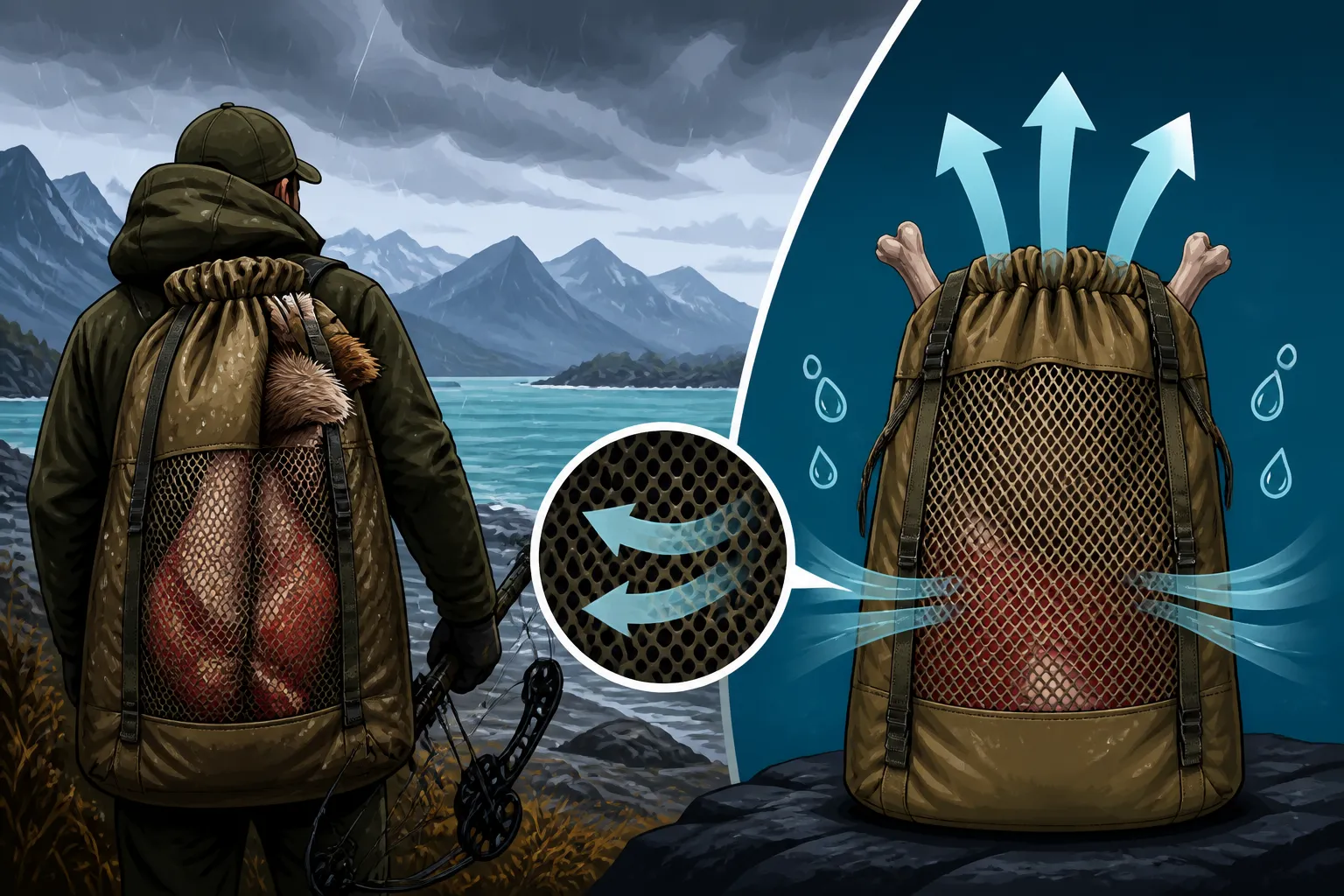
The primary enemy of fresh meat in the field is bacterial growth. Bacteria thrive in warm, moist, oxygen-deprived environments. Coastal Alaska offers two out of three of these factors in abundance: warmth (relative to freezing) and moisture. This makes the third factor—oxygenation through airflow—absolutely paramount. Breathable game bags are designed to facilitate this crucial airflow around the meat. Even when the surrounding air is humid, the microscopic pores in these synthetic fabrics allow moisture on the meat's surface to evaporate gradually, forming a protective "rind." This rind is essentially a dried-out outer layer that significantly inhibits bacterial penetration and growth. Without this airflow, any moisture trapped against the meat becomes a breeding ground for spoilage. It's a subtle but vital difference that can make or break your hunt.
The Problem with Cotton and Traditional Materials
Let's be frank: traditional cotton game bags are a disaster waiting to happen in coastal rain. While they might be inexpensive and seem like a natural choice, their performance in high-humidity, wet conditions is severely lacking. Cotton is highly absorbent. When it gets wet, it stays wet, absorbing moisture from the air and from the meat itself. This waterlogged material then sags and clings tightly to the meat, effectively sealing off airflow and creating a damp, warm compress. Instead of promoting a protective rind, cotton bags in the rain actively create a perfect environment for bacterial growth and meat souring. They become heavy, difficult to manage, and utterly counterproductive to your meat care efforts. If you're Quartering a Bull Moose Alone in the Field in a downpour, the last thing you want is your game bags working against you.
Modern Synthetic Fabrics to the Rescue
Thankfully, modern advancements in fabric technology have provided hunters with excellent alternatives specifically designed for these harsh conditions. These bags are typically made from specialized synthetic blends, often incorporating ripstop nylon or polyester. These materials are inherently hydrophobic, meaning they shed water rather than absorbing it. They dry quickly, even in damp conditions, and maintain their structural integrity when wet. The weave of these fabrics is engineered to allow air to pass through freely, facilitating that all-important rind formation, while still acting as a physical barrier against flies, dirt, and light precipitation. Many serious hunters, often consulting resources like GoHunt for gear reviews and recommendations, understand that investing in high-quality synthetic game bags is non-negotiable for success in wet, coastal environments. These bags are lightweight, pack down small, and are incredibly durable, offering peace of mind when the weather turns.
Key Features to Look For in Coastal Rain Game Bags
Choosing the right game bags for coastal Alaska isn't just about grabbing the first synthetic option you see. There are specific features that differentiate truly effective bags from those that might still leave you wrestling with meat spoilage. Prioritizing these elements will set you up for success.
Material Composition: The Foundation of Performance
When you're out there on the coast, facing unpredictable weather, the material of your game bags is paramount. Look for bags made from specialized blends like nylon-poly or proprietary synthetic fabrics with a ripstop weave. These materials offer a critical combination of properties:
- Hydrophobicity: Unlike cotton, these synthetics resist water absorption, shedding rain and drying quickly. This prevents the bag from becoming a heavy, saturated blanket that smothers your meat.
- Breathability: The weave must be open enough to allow air circulation, which is crucial for cooling and forming that protective "rind" on the meat, even in humid conditions. Yet, it needs to be tight enough to keep out insects like flies and yellow jackets, which are relentless in Alaska.
- Strength: A robust, ripstop construction prevents tears, especially important when you're packing heavy quarters of a moose or a bear through dense brush or across sharp rocks. The last thing you want is a bag ripping open and exposing your meat to dirt and bugs miles from camp. Many brands known for high-performance hunting gear, often featured on platforms like GoHunt, offer bags with these advanced material compositions, making them a reliable choice.
Strength and Durability for Heavy Loads
Alaska game is heavy. Whether you're dealing with the massive quarters of an Alaska-Yukon moose or the dense muscle of a coastal brown bear, your game bags will be subjected to immense strain. You need bags that are not just tear-resistant, but also have reinforced seams and robust stitching. Think about the stress points: where the bag gathers around the meat, where it’s tied off, and where it rubs against your pack frame. A flimsy bag will fail under the weight and constant friction of a serious pack out, especially when wet meat makes everything heavier. Look for bags with high tensile strength that can withstand being dragged, dropped (carefully!), and tied down. This durability is an investment against catastrophic failure in the field. Remember, a failed game bag can compromise your entire harvest.
Reusability and Washability: A Smart Investment
While some hunters might opt for single-use bags, investing in reusable, washable game bags is a smart long-term strategy for Alaska. High-quality synthetic bags are designed to be cleaned thoroughly after each hunt. This not only makes them more economical over time but also more hygienic.
- Easy Cleaning: Look for materials that don't stain easily and can be machine washed or thoroughly rinsed by hand. Blood and dirt should come out without excessive scrubbing.
- Quick Drying: After washing, they should dry quickly to prevent mildew and odors, ready for your next adventure.
- Longevity: A durable, reusable bag signifies a quality product that can withstand multiple seasons of rugged use. This approach is often advocated by experienced hunters and resources found on sites like GoHunt, highlighting the value of gear that lasts.
Sizing and Closure Systems: Protecting Your Harvest
The right size and a secure closure system are often overlooked but are incredibly important.
- Appropriate Sizing: You'll need different-sized bags for different game animals. A bull moose will require large, robust bags for each quarter, while a Sitka blacktail deer might fit into smaller, specialized bags. Having a variety of sizes in your kit is wise. Oversized bags can be cumbersome and expose too much surface area, while undersized bags may not fully enclose the meat.
- Secure Closures: Look for bags with strong, reliable drawstrings, zippers, or ties that can be cinched down tightly. This is crucial for keeping out insects, dirt, and unwanted attention from scavengers. A loose closure is an open invitation for flies to lay eggs, which can ruin meat surprisingly fast.
Best Practices for Using Game Bags in the Wet
Even with the best breathable game bags, proper technique in the field is paramount, especially when facing coastal Alaska's persistent moisture. It's not just about what bags you use, but how you use them to maximize meat preservation.
Pre-Cooling and Initial Air Exposure
Before your meat ever sees the inside of a game bag, proper initial handling is critical. After the shot, the faster you can get your animal field dressed, quartered, and off the bone, the better. This allows the meat to begin cooling down immediately.
- Quartering: For larger game like moose or bear, quartering the animal and getting it broken down quickly exposes more surface area to the air, speeding up the cooling process. This is particularly important if you're Quartering a Bull Moose Alone in the Field.
- Initial Air Exposure: If conditions allow (no immediate heavy rain or insect swarm), a brief period of air exposure for the freshly cut meat can help begin the formation of that crucial "rind." Wipe off any excess blood, and let the surface cool and dry slightly before bagging. This small step can make a big difference in the long run.
Hanging Meat Properly for Maximum Airflow
Once the meat is bagged, how you hang it directly impacts its ability to breathe and cool. Simply throwing it on the ground or leaning it against a tree is a recipe for disaster in humid conditions.
- Elevate and Separate: Always hang your game bags. The goal is to maximize airflow around all sides of each bag. Use sturdy rope and hoist bags high into trees, ideally away from dense foliage that can restrict air movement. If you're hanging multiple quarters, ensure they are separated and not touching each other, or any wet surfaces like tree trunks or leaves. This often means finding multiple suitable hanging points or using crossbars.
- Bear Safety: Remember, hanging meat high also helps protect it from bears. Techniques for Hanging Meat Out of Bear Reach are vital, especially in coastal regions with high brown bear densities.
Protecting from Rain While Still Breathing
This is where it gets tricky in coastal rain. You need to protect the meat from saturation, but you absolutely cannot seal it off entirely. The key is strategic sheltering that doesn't compromise airflow.
- Ventilated Shelter: If heavy rain is continuous, consider pitching a lightweight tarp above your hung meat. Crucially, ensure there's ample space between the tarp and the bags to allow air to circulate freely. You want a roof, not a plastic cocoon.
- Avoid Direct Wrapping: Never wrap game bags tightly in non-breathable plastic tarps or garbage bags for extended periods, especially if the meat is still warm. This will trap moisture, raise the internal temperature, and rapidly accelerate spoilage. This is a common mistake that ruins more meat than anything else.
Regular Inspection and Rotation
Your meat care responsibilities don't end once the bags are hung. Regular monitoring is essential, particularly in damp conditions.
- Daily Checks: Inspect your game bags and meat at least once, preferably twice, daily. Look for any signs of mold, souring odors, or excessive moisture buildup on the inside of the bags.
- Wipe Down Condensation: If you notice condensation forming inside the bags or on the meat's surface, gently wipe it away with a clean cloth. This helps maintain that dry rind.
- Rotate Quarters: If feasible, consider rotating the position of your quarters in the bags or even re-hanging them differently to expose new surfaces to air and ensure even drying. This is especially useful for dense cuts that might be slow to cool or dry on one side. This proactive approach, coupled with quality gear you might find through resources like GoHunt, is what separates a successful meat recovery from a potentially heartbreaking loss.
| Feature | Coastal Rain Conditions | Dry Interior Conditions |
|---|---|---|
| Material | Synthetic (nylon-poly ripstop), hydrophobic, breathable | Cotton, synthetic, or cheesecloth |
| Drying Time | Quick-drying, even when damp | Moderate to quick drying |
| Moisture Control | Allows evaporation, resists absorption | Allows air to form rind, absorbs some blood |
| Protection | High tear resistance, insect barrier, mild rain barrier | Basic tear resistance, insect barrier |
| Weight (Wet) | Stays lightweight, minimal water retention | Becomes heavy, retains significant water |
| Reusability | Highly reusable, easy to clean | Reusable, may stain more |
Disclaimer
The information provided in this guide is for general informational purposes only and does not constitute professional advice. Hunting regulations, weather conditions, and game handling best practices can change rapidly. Always consult the most current Alaska Department of Fish and Game regulations and local weather forecasts before embarking on any hunting trip. Ensure you have proper training and experience in meat care and bear safety for remote Alaska conditions.